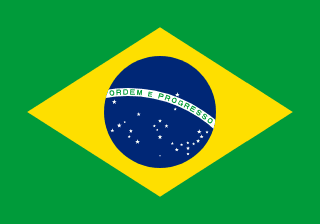
The largest destination of the trade
Of the roughly 12.5 million Africans embarked on the Middle Passage, somewhere near five million were landed in Brazil — far more than in any other single country, and around ten times the number taken to what became the United States. The Portuguese colony ran on enslaved labour in sugar, then gold, then coffee, for more than three centuries.
Resistance was constant. The quilombos — communities of people who had freed themselves — existed across the country, and the greatest of them, Palmares, held out in the north-east for most of the seventeenth century as effectively an independent African state in the Americas, with tens of thousands of residents. Its last leader, Zumbi, was killed in 1695. The date of his death, 20 November, is now Black Consciousness Day and a national holiday.
1888, and the myth that followed
Brazil declared independence from Portugal in 1822 under an emperor, and remained a monarchy until 1889. Slavery outlasted the empire by only a year: abolition came on 13 May 1888, with the Lei Áurea, the Golden Law — signed by Princess Isabel, and the last such law in the Western hemisphere. No land, no compensation and no franchise came with it. The freed were left to a country that then spent decades encouraging European immigration in an explicit attempt to "whiten" the population.
Out of this came the powerful national idea of racial democracy — the claim that Brazil, having mixed so thoroughly, had escaped racism altogether. It is a myth in the technical sense: widely believed, emotionally load-bearing, and contradicted by every measure of income, policing and life expectancy. Afro-Brazilian movements have spent generations dismantling it.
What survived, and thrived
Candomblé, a religion built from Yoruba, Fon and Bantu traditions, is practised openly in Bahia, its orixás kept under Catholic names through the centuries when it was banned. Salvador da Bahia — for two hundred years the capital, and the busiest slave port in the Americas — is today the most visibly African city in the hemisphere. Yoruba words and liturgy are still spoken in its terreiros.
The cultural exports the world knows as Brazilian are largely Afro-Brazilian in root: samba, out of Bahia and the hills of Rio; the martial art capoeira, developed by the enslaved; the axé and afoxé of the Bahian carnival blocos. Brazil did not preserve African culture. It let it become the culture.
The republic, the coups, and the present
A republic since 1889, Brazil has swung between democracy and dictatorship — most recently a military regime from 1964 to 1985. It is now the largest economy and democracy in Latin America, an agricultural and mineral giant, and a country still governing the Amazon, which it holds most of and the world claims a stake in.
Race has moved to the centre of its politics. University quotas since the 2000s, the counting and the naming, and a Black population that is a demographic majority but an economic and political minority — these are the live arguments. For an African newsroom, Brazil is the diaspora at its largest scale, and the place where the questions are asked in a language of their own.