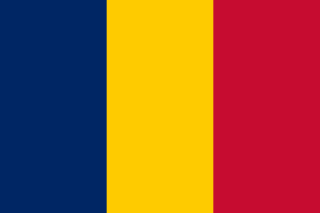
Toumaï and the empires of the lake
In 2001 a fossil skull nicknamed Toumaï — Sahelanthropus tchadensis — was found in the Djurab desert, dated to around seven million years and argued to be one of the earliest known members of the human lineage. Whatever the debates over its exact place, it put Chad at the deep origins of the story.
Much later, from around the ninth century, the Kanem empire rose east of Lake Chad and, as Kanem-Bornu, endured in one form or another for close to a thousand years — one of the longest-lived states in African history. It adopted Islam early, controlled a stretch of the trans-Saharan trade, and was flanked later by the sultanates of Ouaddaï and Baguirmi.
French conquest
France arrived at the turn of the twentieth century, defeating the warlord-conqueror Rabih az-Zubayr near the future capital in 1900. Chad became the neglected far end of French Equatorial Africa — valued mainly for its cotton and its soldiers, and administered lightly, especially in the Muslim north.
That colonial neglect entrenched a divide that has driven the country ever since: a Muslim, Arab and Saharan north, and a Christian and animist, more-farmed south where the French concentrated what development there was. Independence in 1960 handed power to a southerner, François Tombalbaye, and the resentment did the rest.
Civil war, Libya and Habré
Rebellion in the north broke out within a few years and rarely stopped. Libya, under Gaddafi, occupied the northern Aouzou Strip and intervened repeatedly, until Chadian forces drove the Libyans out in the 1987 "Toyota War", fought from pickup trucks. Out of this came Hissène Habré, president from 1982 to 1990, backed by France and the United States as a bulwark against Gaddafi.
Habré's rule was a system of terror; his political police killed and tortured on a large scale. Decades later, in 2016, a special court in Senegal convicted him of crimes against humanity — the first time an African country tried a former ruler of another for such crimes, and a landmark in the fight against impunity.
The Déby dynasty and the Sahel
Habré was overthrown in 1990 by Idriss Déby, who then ruled for thirty years, winning oil revenue after 2003 and making Chad's army a key Western partner against jihadist groups in the Sahel and around Lake Chad. In April 2021 Déby was killed while visiting troops fighting rebels; the military immediately installed his son, Mahamat Idriss Déby, who consolidated power and won a presidential election in 2024.
Chad now sits at the centre of the Sahel's troubles: Boko Haram and its offshoots around the lake, spillover from Sudan's war to the east — which has pushed huge numbers of refugees across the border — and the wider unravelling of the region's security. And Lake Chad itself, once one of Africa's largest lakes, has shrunk drastically since the 1960s, taking fisheries and farmland with it.