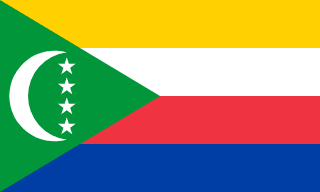
Swahili sultanates
The Comoros sits on the old monsoon trade routes of the western Indian Ocean, and its culture is firmly part of the Swahili world — Bantu-speaking, Muslim, and shaped by centuries of contact with the Arab and Persian Gulf, Madagascar and the East African coast. Austronesian settlers from the direction of Madagascar, Bantu Africans and Arab traders all fed into the population.
By the medieval period the islands were divided among numerous small Muslim sultanates, whose stone towns, mosques and carved doorways still stand at places like Iconi and Domoni. They traded in slaves, spices and ambergris and quarrelled endlessly among themselves — a fragmentation that would outlast the sultans.
France and a partial independence
France colonised the islands in the 19th century, ruling them at first from Madagascar. In a 1974 referendum, three of the four islands voted overwhelmingly for independence while the fourth, Mayotte, voted heavily to stay French. The Comoros declared independence for the whole archipelago on 6 July 1975; France kept Mayotte, and the dispute has festered ever since. The United Nations recognises Comorian sovereignty over Mayotte, but France has entrenched it as an overseas department.
The new state was almost immediately plunged into chaos. Its first president was overthrown within weeks, beginning a run of coups that became the country's grim signature.
The age of Bob Denard
No figure looms larger over Comorian instability than Bob Denard, a French mercenary who took part in several coups between the 1970s and 1990s, at times effectively ruling the islands from behind the scenes and commanding a presidential guard. He installed and removed leaders, and was implicated in the 1989 assassination of President Ahmed Abdallah. His final adventure, an attempted comeback in 1995, was ended by a French military intervention.
The islands' own divisions deepened the crisis. In 1997 Anjouan and Mohéli tried to secede — bizarrely, some Anjouanais wanted to rejoin France — triggering years of conflict. It was resolved only in 2001 with a new constitution that turned the country into a loose union with a rotating presidency, cycling between the islands to share power.
Perfume, poverty and the sea
The economy is small and fragile, based on agriculture and on remittances from a large diaspora in France. The Comoros is the world's leading producer of ylang-ylang, the intensely fragrant flower distilled into an oil that underpins classic French perfumes, and a significant grower of vanilla and cloves — high-value crops that nonetheless leave most people poor.
Politics has stabilised somewhat under Azali Assoumani, a former coup leader turned elected president, though he has been accused of dismantling the power-sharing rotation and extending his rule. Meanwhile the human cost of the Mayotte split continues: thousands of Comorians attempt the short but deadly crossing to Mayotte each year, and many drown in what has been called one of the world's largest marine graveyards.