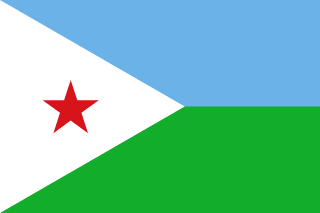
Afar, Issa and the incense road
The territory is home to two main peoples: the Afar, spread across the deserts into Ethiopia and Eritrea, and the Issa, a Somali clan. Both are historically pastoralist, herding across one of the hottest inhabited landscapes on earth. The coast has traded for millennia — the port of Zeila nearby was a major medieval entrepot — and Islam arrived early across the narrow strait from Arabia.
The Afar depression, which stretches into Djibouti, is one of the most geologically active places in the world, a spot where three tectonic plates pull apart, and the region around Lake Assal and the Danakil has long produced salt carried inland by camel caravan.
French Somaliland
France established a foothold in the 1880s, drawn by the harbour and by rivalry with Britain across the water in Aden. The colony of French Somaliland, later renamed the French Territory of the Afars and the Issas, existed largely to serve the port of Djibouti and the railway France built to Addis Ababa, which turned the town into Ethiopia's main gateway.
Djibouti was among the last French colonies in Africa to go. In two referendums, in 1958 and 1967, votes to stay with France were shaped by the boundaries of the franchise and by ethnic tension between Afars, seen as more pro-French, and the more independence-minded Issas. Independence finally came on 27 June 1977, with Hassan Gouled Aptidon as first president.
One state, one family
Gouled ran a one-party state and fought a civil war in the 1990s with an Afar rebel movement, the FRUD, before a settlement brought multi-party politics on paper. In 1999 he handed power to his nephew and security chief, Ismaïl Omar Guelleh, who has ruled ever since, removing term limits in 2010 to keep going. Elections are held and comfortably won; the opposition is weak and often boycotts.
Guelleh's achievement — and it is one — has been to sell stability and geography. He kept the French base, welcomed the American one at Camp Lemonnier after 2001, and in 2017 opened China's first overseas military base a short distance away, alongside Chinese-financed ports and a new railway to Addis Ababa. Djibouti earns hundreds of millions in rent and port fees, though the debts that came with the Chinese infrastructure are heavy.
Ports, bases and salt
The country produces little of its own — food and water are largely imported or, increasingly, desalinated — and its economy rests on services: the ports, the bases, the transit trade for Ethiopia's 120 million people. Youth unemployment is high and the wealth is unevenly shared between the capital and the arid interior.
Yet Djibouti punches far above its size in global affairs. It anchors anti-piracy and counter-terrorism operations for half a dozen powers, sits astride one of the world's most vital shipping lanes, and manages, so far, to profit from great-power rivalry rather than be crushed by it.