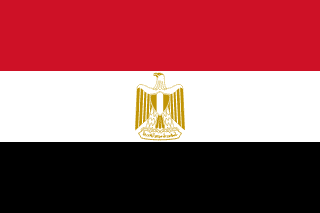
Three thousand years, then everyone else
Dynastic Egypt ran from around 3100 BCE, when Upper and Lower Egypt were unified, until it was absorbed by Persia and then by Alexander. That is roughly three thousand years of a single civilisation — longer than the distance between us and the pharaohs of the New Kingdom. The pyramids at Giza were already ancient tourist sites when Rome was a village.
What outside coverage usually skips is everything after Cleopatra. Egypt became a Roman province in 30 BCE, and then one of the first great centres of Christianity. The Coptic Church dates its founding to Saint Mark in Alexandria; Egyptian monks effectively invented Christian monasticism in the desert. For six centuries Egypt was a Christian country, and the Copts are not a footnote to that history — they are its living continuation, roughly a tenth of the population today.
The Arab and Ottoman centuries
The Arab conquest came in 641 CE. Egypt was Arabised in language and gradually Islamised in faith, and it became one of the intellectual capitals of the Muslim world. The Fatimids founded Cairo in 969 and, with it, al-Azhar — a mosque and university that has taught continuously for over a thousand years and still speaks with authority across Sunni Islam.
Saladin ruled from Cairo. The Mamluks, a caste of soldier-slaves who became the state, stopped the Mongols at Ain Jalut in 1260 and held Egypt until the Ottomans took it in 1517. Napoleon's brief invasion in 1798 is remembered abroad for the Rosetta Stone; in Egypt it opened the way for Muhammad Ali, an Albanian officer who seized power in 1805, massacred the Mamluks, and built the first modern Egyptian state — armies, factories, cotton, and the ambition that would eventually bankrupt the country.
The Canal, the British, and 1952
The Suez Canal opened in 1869. It made Egypt strategically indispensable and financially ruinous: the debt taken on to build and celebrate it handed control to European creditors, and in 1882 Britain occupied the country to protect the route to India. The occupation lasted, in one form or another, seventy years. The 1919 revolution and nominal independence in 1922 left Britain still holding the canal and the army.
On 23 July 1952 a group of Free Officers overthrew the monarchy. Gamal Abdel Nasser emerged as leader, nationalised the Suez Canal in 1956, and survived the invasion that Britain, France and Israel launched to take it back — a military defeat for Egypt that became, through American and Soviet pressure on the invaders, the moment the old empires learned they could no longer act alone. Nasser became the voice of Arab nationalism. The 1967 war with Israel, which lost Egypt the Sinai in six days, was the wound that project never recovered from.
Sadat, Mubarak, Tahrir
Anwar Sadat launched the October 1973 war to restore Egyptian pride and then, astonishing everyone, flew to Jerusalem and signed peace with Israel at Camp David in 1978. It won back the Sinai and cost him his life: he was assassinated by soldiers in 1981. Hosni Mubarak then ruled for thirty years under emergency law.
In January 2011 the squares filled. Eighteen days of protest centred on Cairo's Tahrir Square ended Mubarak's rule. What followed — an elected Muslim Brotherhood president, his removal by the military in 2013, and the presidency of the general who led it, Abdel Fattah el-Sisi — is the part of the story that is still being lived. Sisi's Egypt has built a new capital in the desert east of Cairo and jailed a great many of the people who filled the square.