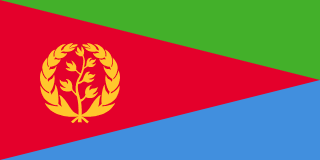
Flag of Eritrea

Eritrea

Horn of Africa · One-party state · Independent 1993

Eritrea won its freedom the hard way, through one of Africa's longest and most disciplined liberation wars — three decades of fighting Ethiopia, culminating in victory in 1991 and formal independence in 1993. The hope was enormous. What followed was a tragedy of a different kind: the movement that freed the country turned it into one of the most closed states on earth, ruled by one man since independence, with no elections, no free press and no implemented constitution. Its defining institution is an open-ended national service that can last for years or decades, which — more than any war — has driven hundreds of thousands of young Eritreans to flee across deserts and seas. Behind the repression sits a place of real beauty, with the finest modernist city in Africa at Asmara.

CapitalAsmara
Populationc. 3.7 million
Working languagesTigrinya, Arabic, English
Also spokenTigre, Afar, Italian
CurrencyNakfa (ERN)
Independence24 May 1991 (de facto); 1993 (formal)
PresidentIsaias Afwerki (since 1993)

Aksum, the Red Sea and the Italians

The Eritrean highlands were part of the world of Aksum, the great trading empire that from the early centuries AD linked the Red Sea to the Mediterranean and the Indian Ocean, minted its own coins and adopted Christianity in the 4th century. The coast, meanwhile, faced Arabia across a narrow sea and was drawn into the Muslim world; the port of Massawa was ruled at various times by Ottomans and Egyptians.

The country as a unit is an Italian creation. Italy seized the coast in the 1880s, named the colony Eritrea after the Latin for the Red Sea, and made it the base for its wider Horn of Africa ambitions. Italian rule built railways, factories and, above all, Asmara — a highland capital remodelled in the 1930s in dazzling Modernist and Futurist style, now a UNESCO World Heritage site.

Federation, annexation, war

After Italy's defeat in the Second World War, the United Nations federated Eritrea with Ethiopia in 1952 — a compromise that satisfied no one. Ethiopia's emperor Haile Selassie steadily dismantled Eritrean autonomy and in 1962 simply annexed the territory as a province. Armed resistance had already begun.

The independence war lasted thirty years. Leadership passed from the Eritrean Liberation Front to the more disciplined, Marxist-influenced Eritrean People's Liberation Front (EPLF), which built an extraordinary guerrilla society in the field — underground schools, hospitals and factories, and a striking degree of gender equality among its fighters. In 1991 the EPLF, together with allied Ethiopian rebels, brought down the Ethiopian Derg regime. A 1993 referendum confirmed independence almost unanimously.

The state that closed

Isaias Afwerki, the EPLF's leader, became president and has held the office ever since. A constitution was ratified in 1997 but never implemented; promised elections have never been held. A brutal 1998–2000 border war with Ethiopia over the town of Badme killed tens of thousands and hardened the regime, which used the "no war, no peace" stalemate that followed to justify permanent mobilisation.

The crackdown came in 2001, when senior officials who called for reform — the "G-15" — were arrested and disappeared, along with independent journalists. Eritrea has had no private press since. It is routinely ranked at or near the bottom of global indices for press freedom.

National service and the exodus

The heart of the system is national service. Introduced as an 18-month duty, it became in practice open-ended — conscripts, men and women, can serve for years or decades at low pay, in the army or assigned to state farms, mines and ministries. Rights groups have compared it to forced labour. It is the single biggest reason young Eritreans leave: for years Eritreans were among the largest groups of people crossing the Mediterranean and Sahara, fleeing not war but conscription.

A surprise peace with Ethiopia in 2018, when Ethiopia's new prime minister Abiy Ahmed accepted the border ruling, briefly reopened the frontier and raised hopes of change. Little followed inside Eritrea; the border closed again, and Eritrean troops were later drawn into the devastating war in Ethiopia's Tigray region. The country remains, as one common phrase has it, the "North Korea of Africa".

c. 100–700 ADThe highlands belong to the Aksumite empire, an early adopter of Christianity.
16th c.Ottomans and later Egyptians control the Red Sea coast around Massawa.
1890Italy consolidates its colony and names it Eritrea.
1930sAsmara is rebuilt as a showcase Modernist city.
1952The UN federates Eritrea with Ethiopia.
1962Ethiopia annexes Eritrea as a province; the war escalates.
1970sThe EPLF becomes the leading liberation movement.
1991The EPLF captures Asmara as the Ethiopian Derg falls (24 May).
1993A referendum confirms independence; Isaias Afwerki becomes president.
1997A constitution is ratified but never implemented.
1998–2000A border war with Ethiopia over Badme kills tens of thousands.
2001The G-15 reformers and independent journalists are arrested and vanish.
2018A peace deal with Ethiopia's Abiy Ahmed briefly reopens the border.
2020–22Eritrean forces join the war in Ethiopia's Tigray region.

Ertra, Ertra, Ertra

"Ertra, Ertra, Ertra" ("Eritrea, Eritrea, Eritrea") was adopted at independence in 1993. Its words, by the poet Solomon Tsehaye Beraki, celebrate the long sacrifice of the liberation war and the enemy defeated by steadfastness. The anthem is inseparable from the EPLF's self-image of endurance and self-reliance — the same values the state would later invoke to justify permanent mobilisation.

Full lyrics and translation → — held off-site deliberately. Anthem texts are official state documents in some countries and still in copyright in others, and Ananse would rather link than guess wrong on either.

Words Solomon Tsehaye Beraki. Music Isaac Abraham Meharezghi & Aron Tekle Tesfatsion. Adopted 1993.

The recording plays through YouTube's own player and belongs to Urumaxi Anthems, who published it — Ananse does not host or restream it. Every anthem in the Atlas is checked against YouTube's own record before embedding, and must carry the country's name in the published title.

What Eritrea is known for

Each place links out to a fuller account. Ananse does not photograph these sites itself yet — when it does, the pictures here will be its own.

Eritrea on the wire

Live from the Ananse newsroom, refreshed every 30 minutes.

Loading…

← All countries