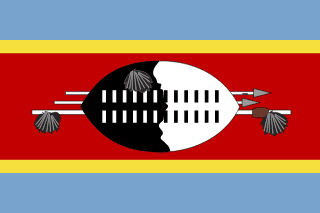
The Dlamini kingdom
The Swazi nation was forged in the same nineteenth-century upheaval, the Mfecane, that reshaped the whole region. Under Sobhuza I and then Mswati II — the king from whom the Swazi take their name — the Dlamini dynasty built a centralised kingdom of Nguni and Sotho peoples, expanding by conquest and absorption while keeping the more powerful Zulu to the south at bay through a mix of war and tribute.
That kingship, and its rituals, are unusually intact. The Incwala, the kingship ceremony, and the Umhlanga, the annual reed dance, are not revivals but continuous traditions, and they are central to how the monarchy still claims its authority.
Squeezed, but not swallowed
In the later nineteenth century the kingdom was pressed by both the British and the Boers, and its rulers signed away concessions they scarcely understood. It ended up a British protectorate, administered loosely, and — crucially — was not absorbed into South Africa despite repeated Pretoria attempts to acquire all three of the neighbouring British territories. In the process the kingdom also lost much of its best land to settlers and any access to the sea, ending landlocked between South Africa and Mozambique.
King Sobhuza II reigned from 1899 to 1982 — one of the longest documented reigns of any monarch anywhere — and steered the kingdom to independence on 6 September 1968 with the monarchy not just intact but dominant.
1973, and the end of the constitution
Independence came with a Westminster-style constitution and parties. It did not last. In 1973 Sobhuza II repealed the constitution, banned political parties and assumed absolute power, ruling by decree through a system of local councils called tinkhundla. That order has held, with adjustments, ever since.
His son Mswati III took the throne in 1986 and rules the same way. Parliament is elected, but candidates stand as individuals, parties are shut out, and the king appoints the prime minister and a share of the legislature. Around sixty local tinkhundla councils nominate most members, the crown fills the rest, and the king can dissolve parliament or veto its bills. Real power sits with the palace and the royal family.
Wealth, poverty and 2021
The contrast is stark: the king's personal wealth and fleet of vehicles against a population where a majority live in poverty and where HIV prevalence among adults has been among the highest recorded anywhere on earth. The economy leans heavily on South Africa — the currency is pegged to the rand, and much revenue comes from a shared customs union. The king has multiple wives, several chosen at the annual reed dance, and a lifestyle of palaces and luxury cars set against a public sector that periodically cannot pay its own bills.
In mid-2021 pro-democracy protests, the largest the country had seen, were met with a security crackdown; dozens of people were killed, the exact number disputed and the state's account contested. The demand — an elected government and a monarch who reigns rather than rules — has not gone away, and it is the central unresolved fact of the country. Trade unions and youth movements have kept the demand alive despite the ban on opposition parties.