Aksum
The Kingdom of Aksum minted its own coinage in gold, silver and bronze from the third century, traded from the Red Sea to India, and was described by a Persian writer of the period as one of the four great powers of the world. King Ezana converted to Christianity in the fourth century, which makes Ethiopia one of the earliest Christian states anywhere.
The stelae at Aksum are single pieces of carved granite, the largest over 30 metres. One was taken to Rome in 1937 and returned in 2005, in three pieces, by military aircraft.
Lalibela's eleven churches were cut downward into the rock in the twelfth and thirteenth centuries — not built, excavated. They are still in use, which is the part most descriptions leave out.
Adwa
On 1 March 1896 an Ethiopian army under Menelik II and Empress Taytu Betul destroyed an invading Italian force at Adwa. It was not a raid or a skirmish; it was a European colonial army defeated in the field by an African one, during the scramble, decisively.
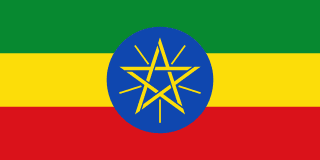
Italy recognised Ethiopian independence. Every other African territory except Liberia was taken. The consequence was that Ethiopia became the reference point for Black political thought worldwide — Ethiopianism in the churches of southern Africa and the American South, Rastafari in Jamaica, and the green, yellow and red that independent African states adopted from the 1950s onward.
Mussolini returned in 1935 with aircraft and mustard gas. Haile Selassie addressed the League of Nations in Geneva in 1936 and told it that collective security was about to be tested; the League did nothing, and the speech reads now as an accurate forecast of the next decade. The occupation lasted five years and never controlled the countryside.
Revolution, famine, federation
The Derg deposed Haile Selassie in 1974 and ran a military-Marxist state through the Red Terror. The famine of 1983–85 killed several hundred thousand people; it was a drought made catastrophic by war, forced resettlement and a government that restricted access to the worst-hit areas. Band Aid raised money and, at the same time, fixed an image of Ethiopia in Western minds that four decades have not shifted.
The Derg fell in 1991. Eritrea became independent in 1993 after a thirty-year war; the two countries then fought again from 1998 to 2000 over a border. Ethiopia's constitution created an ethnic federation, which resolved some questions and sharpened others.
Abiy Ahmed took office in 2018, made peace with Eritrea, and was awarded the Nobel Peace Prize in 2019. War broke out in Tigray in November 2020 and ran until the Pretoria agreement of November 2022. Estimates of the dead reach into the hundreds of thousands.
The river
The Grand Ethiopian Renaissance Dam on the Blue Nile is the largest hydroelectric project in Africa, financed substantially by Ethiopians buying bonds. Egypt, which depends on the Nile for almost all of its fresh water, has treated it as an existential question. Ethiopia's position is that the great majority of the Nile's water originates in its highlands and it has never been permitted to use any of it.
The negotiation has run for more than a decade without resolution. It is the most consequential water dispute on the continent.