Before the empire
The land was not empty and it was not waiting. The Ashanti Empire, centred
on Kumasi from the late seventeenth century, ran a state with a standing
army, a road network, a court system and a treasury. The Golden Stool —
believed to hold the soul of the Ashanti nation — was never a trophy; it
was closer to a constitution. When a British governor demanded to sit on it
in 1900, Yaa Asantewaa, Queen Mother of Ejisu, raised an army rather than
allow it. She lost the war and won the argument: the stool was never taken.
On the coast, the Fante states traded with Europeans for three centuries.
Cape Coast and Elmina castles still stand — Elmina built by the Portuguese
in 1482, the oldest surviving European building south of the Sahara. Their
dungeons held people awaiting the Atlantic crossing. It is worth being
precise: those were commercial buildings, and the trade required African
partners as well as European buyers. Ghana has been more willing than most
to say so out loud.
Independence, and what it meant elsewhere
On 6 March 1957 the Gold Coast became Ghana — a deliberate borrowing from
a medieval empire that sat further north and had no direct territorial
connection. The name was itself a claim: that African history did not begin
with colonisation.
Kwame Nkrumah's line that night — that the independence of Ghana was
meaningless unless linked to the total liberation of Africa — set the terms
for a decade. Ghana funded liberation movements, hosted exiled leaders and
pushed for continental unity harder than any state before or since. Nkrumah
was overthrown in 1966 while abroad.
The long argument with itself
What followed was twenty-five years of coups and counter-coups, and then
something unusual: it stopped. Since 1992 Ghana has held consecutive
elections and transferred power between rival parties three times without
violence — a record most of the region does not have, and the thing
Ghanaians tend to mention first.
The unfinished argument is economic. Ghana exports gold, cocoa and oil, and
imports refined fuel, rice and chocolate. It is the second-largest cocoa
producer on earth and captures a small fraction of what chocolate is worth.
That gap explains the cedi, the debt, and a great deal of the politics.
1482Portuguese build Elmina Castle — the oldest surviving European building south of the Sahara.
c. 1670sOsei Tutu unites the Ashanti states. The Golden Stool becomes the symbol of the nation.
1874Britain declares the Gold Coast a crown colony after decades of coastal control.
1900Yaa Asantewaa leads the War of the Golden Stool against the British.
1948Police fire on unarmed ex-servicemen marching at Christiansborg. The riots that follow start the independence movement in earnest.
19576 March — independence. The first sub-Saharan colony to achieve it.
1960Ghana becomes a republic, with Nkrumah as president.
1966Nkrumah overthrown by military coup while travelling abroad.
1979 · 1981Jerry Rawlings takes power twice, the second time for eleven years.
1992Return to multi-party democracy under the constitution still in force.
2000First peaceful transfer of power between opposing parties.
2007Oil discovered offshore at the Jubilee Field.
2019Year of Return marks 400 years since the first enslaved Africans reached Virginia. Diaspora tourism changes shape.
God Bless Our Homeland Ghana
God bless our homeland Ghana
And make our nation great and strong,
Bold to defend forever
The cause of Freedom and of Right;
Fill our hearts with true humility,
Make us cherish fearless honesty,
And help us to resist oppressors' rule
With all our will and might for evermore.
Hail to thy name, O Ghana,
To thee we make our solemn vow:
Steadfast to build together
A nation strong in Unity;
With our gifts of mind and strength of arm,
Whether night or day, in the midst of storm,
In every need whate'er the call may be,
To serve thee, Ghana, now and evermore.
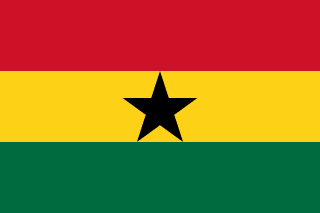
Raise high the flag of Ghana
And one with Africa advance;
Black star of hope and honour
To all who thirst for liberty;
Where the banner of Ghana freely flies,
May the way to freedom truly lie;
Arise, arise, O sons of Ghana land,
And under God march on for evermore.
Full lyrics and translation →
Music and original words Philip Gbeho, 1957.
Lyrics revised 1966 by Michael Kwame Gbordzoe.
The composition is a state symbol of Ghana. The recording plays through
YouTube's own player and belongs to
VocalEssence Chorale Ghana,
who uploaded it — Ananse does not host or restream it. Every anthem in the
Atlas is checked against YouTube's own record before embedding. The search
that found this one also returned a cartoon clip and a gospel track, which
is exactly why nothing goes in unverified.