The richest colony in the world
Saint-Domingue, the French western third of Hispaniola, was by the 1780s the single most profitable colony on earth — producing much of the world's sugar and coffee on the backs of half a million enslaved Africans, worked under conditions so lethal that the enslaved population had to be replaced constantly from the trade. Whites were outnumbered by roughly ten to one.
In 1791 the enslaved rose, in the largest revolt the Americas had seen. The rebellion turned into a thirteen-year revolution, drawing in the French Republic, Spain and Britain. Its greatest leader was Toussaint Louverture, a formerly enslaved man of extraordinary military and political skill who built an army that beat them all. Napoleon lured him to a parley in 1802, seized him, and let him die in a French prison in 1803.
1804
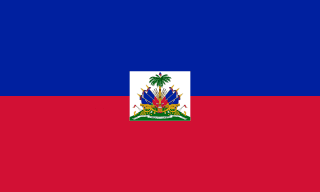
Toussaint's capture did not end it. Jean-Jacques Dessalines took command, defeated Napoleon's expeditionary army — wrecked by Haitian resistance and yellow fever — and on 1 January 1804 declared independence, restoring the island's Taíno name, Haiti. It was the first nation in the Americas to abolish slavery outright, the first Black republic, and the only state ever created by a successful slave revolt.
The reaction was total. The slaveholding powers — France, Britain, and a United States whose own southern economy ran on slavery — refused to recognise Haiti, feared its example, and worked to isolate it. A free Black nation founded by revolt was, to them, a threat to be quarantined.
The debt
In 1825, with French warships off its coast, Haiti agreed to pay France an indemnity of 150 million francs — compensation demanded by the former enslavers for the loss of their "property", meaning the human beings who had freed themselves — in exchange for diplomatic recognition. The sum was later reduced, but to meet it Haiti borrowed from French banks, and spent the rest of the nineteenth century and much of the twentieth servicing the debt. The final payments were made around 1947.
The scale of the drain has been studied closely: estimates of what the indemnity and its interest cost the Haitian economy over that period run into the tens of billions of dollars in today's terms. It is the foundational fact of Haitian poverty — a country made to buy its own freedom twice, first in blood and then in cash, and decapitalised for a century as a result. Haiti's call for that money to be returned is one of the oldest reparations claims in the world.
Occupation, dictatorship, and the present crisis
The United States occupied Haiti from 1915 to 1934, running its finances and rewriting its constitution. The Duvalier dictatorship — François "Papa Doc" and then his son Jean-Claude — ran the country by terror from 1957 to 1986, its Tontons Macoutes killing tens of thousands. Democracy since has been repeatedly interrupted by coups and foreign intervention.
The 2010 earthquake killed somewhere between 100,000 and 300,000 people — the figures are contested — and levelled Port-au-Prince. The reconstruction billions largely bypassed the Haitian state, and a cholera epidemic introduced by UN peacekeepers killed thousands more. The assassination of the president in 2021 tipped the country into the gang-driven collapse of the present. None of this is a story of a people who failed. It is the story of the price the world set on the one revolution it could not forgive.