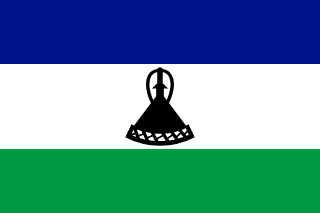
Moshoeshoe, and a nation from the wreckage
In the 1810s and 1820s the Mfecane — the wars and displacements set off across southern Africa, associated with the rise of the Zulu — scattered peoples across the highveld. Moshoeshoe I gathered refugees from many clans and, around 1824, settled them on Thaba Bosiu, the mountain of night, a natural fortress that never fell to an attacker.
From there he built the Basotho nation by absorbing the broken and out-manoeuvring the strong. He kept the Zulu, the Ndebele and the Griqua at arm's length, and paid off enemies he could not beat. His greatest challenge came from the Boers of the Orange Free State, who wanted his fertile western lands.
Protection, and the price of it
After a series of wars with the Free State Boers in the 1850s and 1860s cost him much of that western farmland, Moshoeshoe made the calculation that defined the country: in 1868 he asked Britain to take Basutoland under its protection rather than let it be swallowed by the Boer republic. Britain agreed. It is the reason Lesotho survived as a distinct territory when the surrounding land became South Africa.
It also meant Lesotho was never folded into the Union of South Africa in 1910, despite pressure, and so escaped apartheid citizenship. The cost was a small, landlocked, resource-poor protectorate whose men went to work in South African mines by the tens of thousands — for a century, migrant wages were the economy.
Independence, and instability
Lesotho became independent on 4 October 1966 as a constitutional monarchy under King Moshoeshoe II. Politics quickly turned turbulent: Prime Minister Leabua Jonathan, having lost the 1970 election, annulled the result and suspended the constitution, ruling for another sixteen years until the army removed him in 1986; a long period of military then restored civilian rule followed, a 1998 crisis that brought a South African and Botswanan military intervention, and repeated instability since, including army mutinies and assassinations of military commanders.
The monarchy became genuinely ceremonial; King Letsie III reigns without ruling. In 2022 a businessman, Sam Matekane, won an election on a new party barely months old, a sign of how thoroughly voters had tired of the established parties.
Selling water uphill
Lesotho's asset is altitude and rain. The Lesotho Highlands Water Project, a network of dams and tunnels begun in the 1980s, captures water in the mountains and sends it north into South Africa's industrial heartland around Johannesburg, which is chronically short. The royalties are a major share of government revenue — a small country literally selling water to the large one around it. The scheme also produced a landmark corruption case: in the 1990s Lesotho prosecuted and convicted its own project chief executive and several multinational firms for bribery, one of the few times a poor country has jailed the bribe-takers on a Western megaproject.
The other export is people's labour and, increasingly, garments: Lesotho is one of sub-Saharan Africa's larger clothing exporters, much of it to the United States. Both leave it exposed — to South African demand, to American trade policy, and to an HIV rate that is among the very highest in the world.