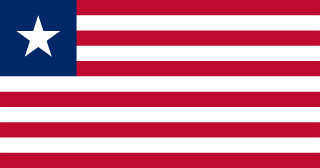
The settler republic
The Grain Coast had its own peoples long before the settlers — the Kpelle, Bassa, Vai, Kru and others, the Vai famous for inventing an indigenous script around the 1830s. Into this world the American Colonization Society, a mix of abolitionists and slaveholders who wanted free Black Americans removed from the United States, began landing settlers at Cape Mesurado in 1822. They named the capital Monrovia after President James Monroe.
On 26 July 1847 the settlers declared the Republic of Liberia, the first on the continent, with a constitution echoing America's. The True Whig Party would govern without interruption from 1878 to 1980. The catch was that the Americo-Liberian settler class monopolised power, land and citizenship, while the indigenous majority were long denied the vote — a hierarchy as rigid as any colony's.
Rubber and rupture
In 1926 the American firm Firestone leased a million acres for what became the world's largest rubber plantation, binding Liberia's economy to a single foreign company and cheap labour. For decades the settler republic looked stable and pro-Western. Then in 1980 Master Sergeant Samuel Doe, of the indigenous Krahn, led a coup, executed President William Tolbert and much of his cabinet on a Monrovia beach, and ended 133 years of Americo-Liberian rule — replacing it with a brutal and tribalist military regime.
Doe's misrule and ethnic favouritism bred rebellion. On Christmas Eve 1989 Charles Taylor invaded, launching a civil war of horrifying violence, with child soldiers and massacres. Doe was captured and killed on video in 1990.
War, peace and after
The first civil war dragged on until 1997, when Taylor won an election held under the shadow of his guns. A second war erupted in 1999 and ran until 2003, when, with rebels at the gates of Monrovia and heavy international pressure, Taylor resigned and went into exile; he was later convicted at The Hague for his role in Sierra Leone's war. The two conflicts killed an estimated 250,000 people, a figure that is contested, and shattered the country.
In 2005 Liberia elected Ellen Johnson Sirleaf, the first woman elected to lead an African state, who won the Nobel Peace Prize in 2011 and steered the recovery and the fight against Ebola. The footballer George Weah, the only African to win the Ballon d'Or, succeeded her in 2018, and in a sign of the new normal peacefully conceded defeat to Joseph Boakai in the 2023 election.
Rubber, ore and the reckoning
Liberia's economy has long been mortgaged to outsiders. Firestone's rubber, still flowing, and iron ore dug for export tie it to global commodity swings, while its "flag of convenience" ship registry — one of the largest on earth — lets foreign vessels fly Liberian colours for a fee, a quirk that quietly funds the state.
The country is still settling accounts with its wars. A Truth and Reconciliation Commission named the guilty, but for years none were tried at home; only in the 2020s did Liberia move toward a war-crimes court, even as former warlords sat in its legislature. Providence Island in Monrovia, where the first settlers landed, and the old Americo-Liberian estates stand as reminders of the settler republic whose contradictions set the whole tragedy in motion.