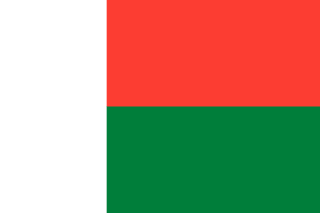
An Austronesian island
Madagascar's deepest surprise is its origin. Although it lies some 400km off the coast of Mozambique, its first human settlers arrived from the other side of the Indian Ocean — Austronesian seafarers from the region of Borneo, who reached the island roughly 1,500 years ago in one of history's most remarkable maritime migrations. Later waves of Bantu Africans, and Arab and other traders, added to the mix.
The result is genuinely distinctive. The Malagasy language is Austronesian, closely related to a language of southern Borneo, yet carries African and Arabic borrowings; staple foods, outrigger canoes and wet-rice terraces echo Southeast Asia, while cattle-keeping and much else is African. Malagasy culture places great weight on the ancestors, expressed in elaborate tombs and, among some groups, the famadihana, the ceremonial "turning of the bones".
The kingdom of the highlands
For centuries Madagascar was divided among many peoples and small kingdoms. From the late 18th century one of them, the Merina of the central highlands, expanded under King Andrianampoinimerina and his son Radama I to control much of the island from the capital, Antananarivo. The Merina kingdom built roads and an army, welcomed British missionaries who gave Malagasy a written form, and became a recognised state that signed treaties with European powers.
It is remembered above all for its queens. Queen Ranavalona I, who ruled from 1828, resisted European influence fiercely, expelling missionaries and persecuting Christian converts, and is variously seen as a tyrant or a nationalist heroine. Later monarchs leaned the other way, adopting Christianity, but the kingdom's independence was running out of time as France pressed its claims.
Conquest and a bloody road to freedom
France invaded, deposed the last queen, Ranavalona III, and annexed Madagascar as a colony in 1896, abolishing the monarchy and exiling the queen to Algeria. Colonial rule was harsh and extractive, and resentment ran deep. In 1947 it erupted in a mass nationalist uprising against French rule — one of the bloodiest in Africa. The French suppression was ferocious: estimates of the dead vary widely and remain contested, ranging from tens of thousands into the higher tens of thousands. It is a defining, and long-underacknowledged, episode.
Independence came more peacefully on 26 June 1960, with Philibert Tsiranana as first president. But the pattern of the decades since has been instability: Tsiranana fell in 1972 amid protests; a long, isolating socialist period under Didier Ratsiraka followed; he in turn was toppled and returned more than once; and in 2009 Andry Rajoelina, a young former mayor, seized power from the elected president in an army-backed coup that drew international condemnation.
Wealth in nature, poverty in fact
Madagascar is, by biodiversity, one of the richest places on earth and, by income, one of the poorest countries in the world — a cruel gap. Its forests hold lemurs, the tenrecs, the fossa, hundreds of endemic birds and reptiles, and the baobabs and spiny forests that make its landscapes look like nowhere else. Yet slash-and-burn farming, logging and poverty have stripped much of the original forest, threatening the very wildlife that could sustain tourism.
The economy leans heavily on agriculture — Madagascar produces the great majority of the world's natural vanilla, along with cloves and other crops — and on mining and tourism, all vulnerable to cyclones and to the political turbulence that recurs with grim regularity. That turbulence continued into the 2020s: after Rajoelina won elections in 2018 and 2023, the country was again convulsed by upheaval, with reports of a military intervention in late 2025 that once more threw the question of who governs Madagascar into doubt. The island's abundance and its instability remain, as ever, side by side.