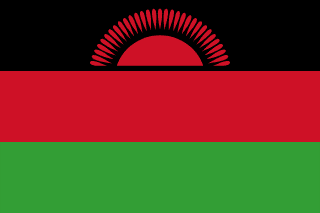
Maravi, and the name
The country is named for the Maravi, a Chewa empire that flourished around the southern end of the lake from roughly the fifteenth century, trading ivory and iron. Later came Ngoni migrants pushed north in the upheavals of the Mfecane, and Yao traders who tied the region into the east-coast commerce — including, grimly, the slave trade running to Zanzibar.
David Livingstone reached the lake in 1859 and made suppressing that trade his cause; the Scottish missions that followed named their town Blantyre after his birthplace. Missionary influence is why Malawi has an outsized Presbyterian history and why the churches later carried so much of its politics. From that Chewa world survives the Nyau secret society, whose masked Gule Wamkulu dancers are recognised by UNESCO.
Nyasaland, and Chilembwe
Britain declared a protectorate in 1891, eventually named Nyasaland. In 1915 John Chilembwe, an American-educated Baptist minister, led a short, doomed rising against colonial land policy and the conscription of Africans into the First World War. He was killed within days, but the rebellion made him the country's first national hero and put him, much later, on the banknotes.
The Federation of Rhodesia and Nyasaland, imposed in 1953, yoked poor Nyasaland to the white-settler Rhodesias and was fiercely opposed. The fight to break it made the career of Hastings Kamuzu Banda, a doctor who had spent decades abroad and returned in 1958 to lead the independence movement.
Banda's long rule
Malawi became independent on 6 July 1964. Within two years Banda had crushed dissent within his own party, declared a one-party state, and in 1971 had himself named President for Life. He ran the country as a personal fief for three decades: a paramilitary Young Pioneers, a censor who banned everything from films to trousers on women, and, alone in Africa, open ties with apartheid South Africa. He moved the capital from Zomba to Lilongwe in the mid-1970s and built a personality cult in which he was hailed as the Ngwazi, the conqueror.
It was rigid, eccentric and repressive, and it lasted until the end of the Cold War removed his usefulness to the West. Churches and donors turned against him; a referendum in 1993 rejected one-party rule.
The ballot, and the courts
In 1994 Malawi held its first multiparty election and Banda lost to Bakili Muluzi. He accepted it and left power, an old dictator retiring at the polls. That set a pattern the country has mostly kept. Bakili Muluzi gave way to Bingu wa Mutharika, and when Mutharika died in office in 2012 his vice-president, Joyce Banda — no relation — became one of Africa's first women presidents.
Its sharpest democratic moment came in 2020. After a disputed 2019 election, the courts annulled the result over tampered tally sheets — correction fluid on the forms — and ordered a rerun, one of very few times anywhere in Africa a court has overturned a presidential poll and the order has held. The opposition won the rerun. Malawi remains one of the poorest countries in the world, dependent on rain-fed maize and tobacco and on aid, but its judges have earned a reputation the politicians have not.