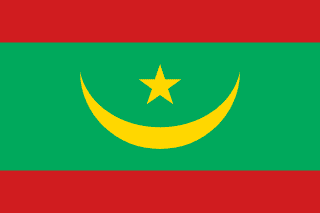
The desert of scholars
For millennia the land was Berber and, in its wetter south, Black African. Around 300 CE the Sanhaja Berbers spread camel nomadism across the western Sahara, and by the eleventh century a reformist Islamic movement, the Almoravids, arose among them near the Senegal River. From this desert base the Almoravids conquered Morocco, founded Marrakesh and crossed into al-Andalus, reshaping the western Mediterranean.
The trans-Saharan trade in gold, salt and slaves made caravan cities of Chinguetti and Ouadane, and centres of learning where thousands of manuscripts on law, astronomy and grammar were copied and stored. Chinguetti was counted among the holy cities of Sunni Islam. Some of those desert libraries, still held by families, endure against the encroaching dunes — one of West Africa's great neglected treasures.
Caste, colony and coups
Mauritanian society hardened into a hierarchy: the Bidhan or "White Moors", Arab-Berbers who spoke Hassaniya Arabic; the Haratin or "Black Moors", the descendants of enslaved people who shared that language and culture; and the Afro-Mauritanians of the south — Halpulaar, Soninke and Wolof — along the river. France declared a protectorate in 1904 but barely governed the interior; there was no real capital until Nouakchott was built almost from scratch at independence.
Independence came on 28 November 1960 under Moktar Ould Daddah. Mauritania's disastrous involvement in the Western Sahara war in the 1970s triggered the first of many coups in 1978, beginning decades of military-dominated rule. In 1989 a border dispute with Senegal exploded into violence and the expulsion of tens of thousands of Afro-Mauritanians, a wound still unhealed.
Slavery and the present
Mauritania has the grim distinction of being the last country in the world to formally abolish slavery, in 1981, and it made enslavement a crime only in 2007. Rights groups say hereditary slavery and its aftermath persist, and anti-slavery activists such as Biram Dah Abeid have been jailed — even as one of them, in a paradox typical of the country, has run strongly for president.
The economy runs on iron ore, whose train from the Zouérat mines to the coast is among the longest and heaviest in the world, and increasingly on offshore gas. Since a rare peaceful, if disputed, handover of power, President Mohamed Ould Ghazouani, elected in 2019 and re-elected in 2024, has positioned the country as a Western partner against jihadist groups in the Sahel — a fragile stability on the desert's dangerous southern edge.
The train, the gas and the ardin
Mauritania is a country of extreme scale. The iron-ore train from Zouérat to Nouadhibou runs to more than two kilometres, among the longest and heaviest on earth, and travellers still ride its open ore wagons across the desert for a day and a night. Offshore, the Grand Tortue Ahmeyim gas field, shared with Senegal, began production in the 2020s and promises to reshape the economy.
Its coast holds the Banc d'Arguin, a vast national park where the Sahara meets the Atlantic and millions of migratory birds gather, fished by Imraguen communities using methods little changed in centuries. Inland, the ancient libraries of Chinguetti and the Moorish arts — the ardin harp played by women, the ritual of three glasses of tea, sweet then strong — preserve a desert civilisation most of the world never sees.