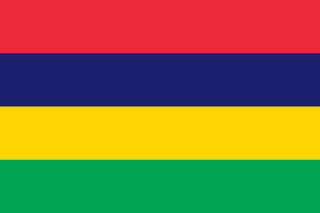
The empty island and the dodo
Mauritius had no human population before the modern era. Arab and Austronesian sailors knew it, and the Portuguese visited in the 16th century, but it was the Dutch who first settled, from 1598, naming it after Prince Maurice of Nassau. They logged its ebony and, within decades, hunted to extinction the dodo — a large, flightless, fearless pigeon that had evolved with no predators. Its death, complete by around 1680, became the world's most famous emblem of extinction.
The Dutch gave up in 1710. France took over in 1715, renamed the island Île de France, and founded Port Louis as a naval base that harried British shipping. Under the French the sugar plantations took hold, worked by enslaved Africans and Malagasy — a brutal system whose memory survives at Le Morne, the mountain where escaped slaves are said to have taken refuge.
Sugar and indenture
Britain seized the island in 1810 and kept it at the peace, restoring its French name, Mauritius, but retaining French law, language and the planter class. When Britain abolished slavery in the 1830s, the planters replaced enslaved Africans with indentured labourers from British India — and here the transformation began. Over the following decades around half a million Indians arrived to cut cane, and most stayed.
The immigration depot at Aapravasi Ghat in Port Louis, now a UNESCO World Heritage site, was the gateway through which they passed — the starting point of the vast indenture system that would carry Indians across the British Empire. It is why Mauritius today is a majority-Indian society, with Hindu and Muslim communities alongside the Creole descendants of Africa, Franco-Mauritians and Sino-Mauritians.
Independence and the making of a success
Mauritius moved to independence peacefully, though not without fear — many in the Franco-Mauritian and Creole minorities worried about domination by the Indian majority. Independence came on 12 March 1968 under Seewoosagur Ramgoolam, the country's founding leader, and Mauritius became a republic in 1992.
What followed defied the gloomy predictions. A poor, crowded, mono-crop sugar island built one of Africa's rare enduring multi-party democracies, with genuine alternation of power, and diversified into textiles, tourism, financial services and technology. Living standards rose sharply; Mauritius is now classed as a high-income country, routinely near the top of African rankings for governance and ease of doing business. The "Mauritian miracle" is studied as a model, if an imperfect one, of development.
The Chagos question
One injustice shadowed the success. In the 1960s, before independence, Britain split the Chagos Archipelago off from Mauritius to create the British Indian Ocean Territory, and between 1968 and 1973 forcibly removed the entire Chagossian population so that the United States could build a major military base on the largest island, Diego Garcia. The Chagossians were dumped in Mauritius and Seychelles, and have fought for the right to return ever since.
Mauritius pursued the case for decades. In 2019 the International Court of Justice ruled that Britain's separation of the Chagos was unlawful and that it should end its administration; the UN General Assembly agreed overwhelmingly. In October 2024 Britain announced it would cede sovereignty over the Chagos to Mauritius, while retaining the Diego Garcia base under a long lease — a landmark, if still contested, victory. In the same period Mauritian politics turned again: Navin Ramgoolam, son of the founding premier, returned to power at the head of a coalition after the November 2024 election.