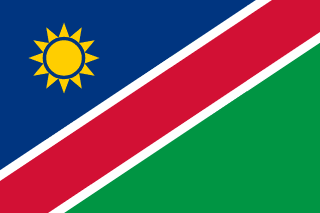
Desert peoples
The land is among the driest on earth, and its human history is shaped by that. The San were there first; then Nama and Damara, Herero cattle-herders, and the Ovambo of the wetter north, who are today the largest group. The Namib desert along the coast is reckoned the oldest desert in the world, and the coast itself — the Skeleton Coast — is named for the ships and the whales it wrecked.
German traders and missionaries arrived in the nineteenth century, and in 1884 Germany claimed the territory as South West Africa.
The genocide
The Herero and Nama rose against German land seizures and abuses in 1904. The German commander, Lothar von Trotha, issued an extermination order: the Herero were driven into the Omaheke desert to die of thirst, the wells poisoned or guarded, and survivors worked to death in concentration camps, the worst on Shark Island. Perhaps 65,000 to 80,000 Herero — up to four-fifths of the people — and around 10,000 Nama were killed. Skulls were shipped to Germany for racial research, and only began to be repatriated from German institutions from 2011.
Germany acknowledged the killings as genocide only in 2021 and offered 1.1 billion euros in development aid over thirty years. Herero and Nama leaders have rejected the deal as inadequate and, worse, as negotiated over their heads between two governments; the argument is not settled and is one of the sharpest reparations disputes in the world.
Under South Africa
Germany lost the colony in the First World War, and South Africa took it over under a League of Nations mandate. When the mandate should have become a UN trusteeship, South Africa refused, tried to annex the territory outright, and extended apartheid to it. The International Court of Justice and the UN spent decades declaring the occupation illegal while South Africa ignored them. A colonial-era veterinary cordon, the Red Line, still splits the commercial farming south from the crowded communal north where most Namibians live.
SWAPO began an armed struggle in 1966. The war was bound up with the conflict in Angola next door; the Cuban and Angolan stand at Cuito Cuanavale in 1987 to 1988 helped force South Africa to the table.
Independence, and after
Namibia became independent on 21 March 1990, the last country on the African mainland to shed colonial or minority rule, with Sam Nujoma as its first president. Walvis Bay, held back by South Africa, was returned in 1994. At just over two people per square kilometre, Namibia is one of the least densely populated countries on earth.
SWAPO has governed ever since, and in 2024 Namibians elected Netumbo Nandi-Ndaitwah, the country's first woman president. The economy runs on diamonds, uranium and fishing; recent offshore oil finds may change it again. Land reform has stayed slow and deliberately cautious, wary of the wreck next door in Zimbabwe; a willing-buyer, willing-seller model has barely shifted an ownership map in which a white minority still holds most commercial farmland. The genocide question, and the extreme inequality left by German and South African land policy, remain the two things the country cannot talk its way past.