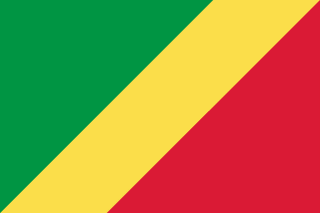
Flag of Republic of the Congo

Republic of the Congo

Central Africa · Republic · Independent 1960

The smaller of the two Congos, and the one people forget, the Republic of the Congo is defined by its river, its oil and its president. Brazzaville faces Kinshasa across the widest navigable stretch of the Congo river — the only place on earth where two national capitals sit within sight of each other. Offshore oil made the state rich; Denis Sassou Nguesso, in power for most of the time since 1979, has made sure the state stays his.

CapitalBrazzaville
PopulationAbout 6 million
Official languageFrench
Also spokenKituba and Lingala widely
CurrencyCentral African CFA franc (XAF)
Independence15 August 1960 (from France)

The Kongo and the river

Long before the colonists, this was part of the world of the Kingdom of Kongo and neighbouring states, whose reach spanned both banks of the lower river and into modern Angola and DR Congo. The river itself — vast, rapids-choked below Malebo Pool — shaped everything: trade, slaving, and later the colonial railways built to carry goods around the unnavigable stretch to the coast.

The French made Brazzaville, named after the Italian-born explorer Pierre Savorgnan de Brazza, the capital of the whole of French Equatorial Africa. During the Second World War it briefly served as the symbolic capital of Free France in Africa, and the 1944 Brazzaville Conference set out cautious first steps towards reform of the empire.

A people's republic

Independence came in 1960. After a few turbulent years the country took a sharp turn: in 1969 it declared itself the People's Republic of the Congo, the first avowedly Marxist-Leninist state in Africa, complete with a red flag and a single ruling party. The rhetoric was radical; the reality was a series of military strongmen and coups.

Denis Sassou Nguesso emerged from this system, taking power in 1979. He ruled until 1992, when a wave of democratisation swept much of Africa and he lost a multiparty election — a rare and genuine handover.

Oil and the 1997 war

The experiment did not last. In 1997, on the eve of new elections, fighting between rival political militias exploded into a short, vicious civil war centred on Brazzaville. Sassou Nguesso, backed by Angolan troops, fought his way back into power, and he has held it ever since. The capital's ruined southern districts and the "Ninjas", "Cobras" and "Cocoyes" militia names are still part of living memory.

What funds the state is oil, pumped mostly offshore. The country is one of sub-Saharan Africa's larger producers, yet much of the population remains poor, and the government has repeatedly had to seek debt relief even as crude flowed. The gap between the oil revenue and the lives of ordinary Congolese is the country's central, unanswered question.

The long presidency

A 2015 referendum removed the age and term limits that would have forced Sassou Nguesso to stand down, and he was returned in 2016 and again in a 2021 election that the opposition and outside observers criticised heavily. His main rival in 2021 died of Covid-19 on polling day. A further presidential election was held in March 2026; as with previous votes its conduct and result are contested, and firm independent detail is limited.

Taken together it makes Sassou Nguesso one of the longest-serving leaders in the world, a fixture of Central African politics since the Cold War. The river, the oil and the man remain the three constants of the Republic of the Congo.

15th–18th c.The Kingdom of Kongo and neighbouring states dominate the lower river.
1880De Brazza secures the north bank for France; Brazzaville is founded.
1910Brazzaville becomes capital of French Equatorial Africa.
1944The Brazzaville Conference debates the future of the French empire.
196015 August — independence from France.
1969The country declares itself a Marxist-Leninist People's Republic.
1979Denis Sassou Nguesso takes power.
1992He loses a multiparty election and hands over power.
1997A civil war returns Sassou Nguesso to power with Angolan help.
2015A referendum removes term and age limits.
2021Sassou Nguesso is re-elected amid opposition claims of fraud.
2026A further presidential election is held in March.

La Congolaise ("The Congolese")

Adopted around independence, "La Congolaise" was dropped during the Marxist period in favour of a revolutionary anthem, "Les Trois Glorieuses", then restored in 1991 as the People's Republic was dismantled. Its return was itself a statement — a rejection of the single-party era. It is easily confused in searches with the anthem of neighbouring DR Congo across the river.

Full lyrics and translation → — held off-site deliberately. Anthem texts are official state documents in some countries and still in copyright in others, and Ananse would rather link than guess wrong on either.

Words Jacques Tondra and Georges Kibanghi. Music Jean Royer and Joseph Spadilière. Adopted 1959, readopted 1991.

The recording plays through YouTube's own player and belongs to Tyler Sparkle, who published it — Ananse does not host or restream it. Every anthem in the Atlas is checked against YouTube's own record before embedding, and must carry the country's name in the published title.

What Republic of the Congo is known for

Each place links out to a fuller account. Ananse does not photograph these sites itself yet — when it does, the pictures here will be its own.

Republic of the Congo on the wire

Live from the Ananse newsroom, refreshed every 30 minutes.

Loading…

← All countries