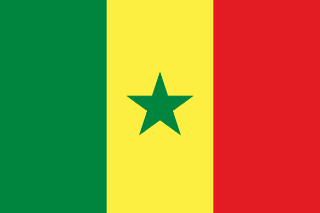
Flag of Senegal

Senegal

West Africa · Republic · Independent 1960

Senegal has never had a successful coup. In a region where that sentence is close to unique, it is the fact Senegalese mention first — and the one foreign coverage mentions last, usually while filing from Dakar about instability somewhere else.

CapitalDakar
PopulationAbout 18 million
Official languageFrench
Most spokenWolof, used by a large majority as a first or second language
Also spokenPulaar, Serer, Jola, Mandinka
CurrencyCFA franc (XOF)
Independence4 April 1960

Jolof, and the coast

The Jolof Empire held much of the region from the fourteenth century until it fragmented in the sixteenth into Cayor, Baol, Waalo and the Serer kingdoms of Sine and Saloum. Islam arrived early along the Sahelian trade routes and was consolidated by Sufi orders — the Tijaniyya, and the Mouride brotherhood founded by Cheikh Amadou Bamba — which remain among the most important institutions in the country and are consistently underestimated by anyone reading Senegal only through its state.

Gorée Island, off Dakar, is the place most visitors know. Historians differ sharply on how many people were actually shipped from it — the volume was far greater elsewhere on the coast — but the House of Slaves is where the argument is most often had, and the Door of No Return is a real door.

The Four Communes

Saint-Louis, Gorée, Rufisque and Dakar were governed as French communes, and their African residents held rights no other colonised Africans held. From 1848 they could elect a deputy to the French parliament in Paris. In 1914 they elected Blaise Diagne, the first African to sit in it.

That produced a Senegalese political class arguing inside French institutions a full century before independence, and it is the direct ancestor of the country's unusual civilian habit.

Senghor, and the handover

Léopold Sédar Senghor was a poet, a co-founder of Négritude, the first African elected to the Académie française — and Senegal's first president. He was also a Catholic governing a country that is around 95 per cent Muslim, for twenty years, without that being the central fact of his presidency.

In 1980 he resigned. Voluntarily, mid-term, handing over to his prime minister. In West Africa in 1980 this had essentially no precedent.

Abdou Diouf lost an election in 2000 and left. Abdoulaye Wade lost in 2012, after courts allowed him a contested third-term bid and voters ended it anyway. In March 2024, after an attempt to postpone the election was struck down by the Constitutional Council, Bassirou Diomaye Faye was elected — having been released from prison ten days before the vote.

What Dakar exports

Mbalax — sabar drumming pushed through a full band — is Senegal's own genre, and Youssou N'Dour its most recognisable voice anywhere. Ousmane Sembène, novelist and film-maker, is generally regarded as the father of African cinema; he turned to film because it reached people who did not read French.

Dakar also holds the continent's largest contemporary art biennale, Dak'Art, and the Museum of Black Civilisations, opened in 2018 and built explicitly with the restitution argument in mind.

c. 1350The Jolof Empire consolidates.
1444Portuguese ships reach the Senegalese coast.
1659The French found Saint-Louis, their first permanent settlement in West Africa.
1848Residents of the Four Communes gain the right to elect a deputy to Paris.
1914Blaise Diagne becomes the first African elected to the French National Assembly.
1944Thiaroye. French forces kill demobilised West African soldiers demanding their back pay.
19604 April — independence, with Senghor as president.
1966Dakar hosts the first World Festival of Negro Arts.
1980Senghor resigns voluntarily and hands over to Abdou Diouf.
2000Diouf loses an election and leaves office. The first alternance.
2012Wade's third-term bid is rejected at the ballot box.
2018The Museum of Black Civilisations opens in Dakar.
2024An attempt to postpone the presidential election is overturned; Bassirou Diomaye Faye is elected weeks after leaving prison.

Pincez Tous vos Koras, Frappez les Balafons

Senegal is one of very few countries whose anthem was written by its own head of state, and the only one whose head of state was a member of the Académie française. The title — "Everyone strum your koras, strike the balafons" — names two West African instruments rather than the trumpets and drums of the European tradition, which for a 1960 anthem written in French is a deliberate argument.

Full lyrics and translation → — held off-site deliberately. Anthem texts are official state documents in some countries and still in copyright in others, and Ananse would rather link than guess wrong on either.

Words Léopold Sédar Senghor. Music Herbert Pepper. Adopted 1960.

The recording plays through YouTube's own player and belongs to DN Anthems, who published it — Ananse does not host or restream it. Every anthem in the Atlas is checked against YouTube's own record before embedding, and must carry the country's name in the published title.

What Senegal is known for

Each place links out to a fuller account. Ananse does not photograph these sites itself yet — when it does, the pictures here will be its own.

Senegal on the wire

Live from the Ananse newsroom, refreshed every 30 minutes.

Loading…

← All countries