Punt, poets and sultanates
The Somali coast is ancient trading ground — many scholars locate the fabled Land of Punt, which supplied Pharaonic Egypt with frankincense, myrrh and gold, somewhere along this shore. For centuries Somali port cities such as Zeila and Mogadishu were nodes in the Indian Ocean world, and a string of Muslim states rose inland and along the coast: the Ajuran Sultanate, the Adal Sultanate that fought the Ethiopian highlands, and later the Geledi and the Majeerteen.
Above all, Somali society was carried by the spoken word. In a mobile, pastoral world, poetry was the supreme art and a public medium — used to praise, to shame, to argue politics and to settle disputes. The great early-20th-century leader Sayyid Mohammed Abdullah Hassan, dismissed by the British as the "Mad Mullah", was as feared for his verse as for his 20-year armed resistance.
Two colonies, one nation
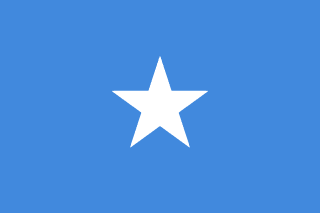
European powers split the Somali lands five ways — British Somaliland in the north, Italian Somaliland in the south, French Somaliland (now Djibouti), and Somali-populated regions handed to Ethiopia (the Ogaden) and to Kenya. The dream of uniting all five, the five-pointed star on the flag, has shaped Somali politics ever since.
British Somaliland gained independence on 26 June 1960 and Italian Somaliland on 1 July; the two immediately merged to form the Somali Republic. Civilian rule gave way in 1969 to a coup by Siad Barre, who ruled for over two decades on a mix of scientific socialism, clan manipulation and a disastrous 1977–78 war with Ethiopia over the Ogaden.
Collapse
Barre's regime turned savagely on its own people — the bombardment of the northern city of Hargeisa in the late 1980s killed tens of thousands — and in 1991 it fell. What followed was not a new government but the near-total collapse of the state, as clan-based militias fought over the ruins. The famine that accompanied it drew a US-led intervention whose failure was seared into memory by the 1993 "Black Hawk Down" battle in Mogadishu.
The north broke away: Somaliland declared independence in 1991, and Puntland later formed an autonomous region in the northeast. In the south, years of warlordism gave way in the mid-2000s to the Islamic Courts Union and then to its hardline offshoot al-Shabaab, an al-Qaeda affiliate that still controls swathes of countryside and mounts deadly attacks.
The stateless economy and slow rebuilding
What kept Somalis alive through the collapse was not the state but the diaspora and the market. Remittances sent home through the hawala money-transfer system run to billions of dollars a year, dwarfing aid, and Somalia developed some of the cheapest telecoms and most enthusiastic mobile-money use in Africa — commerce thriving in the absence of a government to tax or regulate it.
A federal government was re-established from 2012, backed by an African Union force, and has slowly clawed back territory from al-Shabaab. Hassan Sheikh Mohamud, president since 2022, has pushed offensives against the group and Somalia's entry into the East African Community. But droughts, floods, the unresolved status of Somaliland and al-Shabaab's resilience mean the rebuilding is far from done.