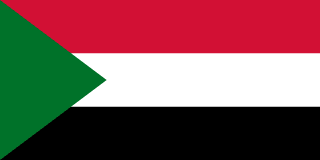
Kush, Meroë and the Black pharaohs
The Nile made a state here very early. Kerma, near the third cataract, was one of Africa's first cities and kingdoms by 2500 BCE. Its successor, the Kingdom of Kush, grew powerful enough that around 750 BCE its kings marched north and conquered Egypt, ruling as the Twenty-fifth Dynasty — the "Black pharaohs".
Pushed back south, the Kushites built a new capital at Meroë, whose iron furnaces and steep-sided pyramids still stand in the desert. Sudan has more pyramids than Egypt — over two hundred at Meroë and the older royal sites — though they are smaller, and far fewer visitors come.
Christian Nubia and the coming of Islam
When Meroë declined, Nubia became Christian. Three kingdoms — Nobatia, Makuria and Alodia — held the middle Nile for roughly seven hundred years, with cathedrals, a literate church and treaties that kept the expanding Muslim world to the north at bay for centuries.
Islam and Arabic spread gradually through trade and migration rather than conquest. By the sixteenth century the Funj Sultanate of Sennar ruled much of the centre, an Islamic state that gave the northern riverine culture much of its present shape while the south and the far west remained distinct.
The Mahdi, Gordon, and the British
Egypt, itself then under Ottoman and later British influence, conquered Sudan in the 1820s. Resentment of that rule exploded in 1881 when a religious leader, Muhammad Ahmad, declared himself the Mahdi and launched a revolt. In 1885 his forces took Khartoum and killed the British general Charles Gordon on the palace steps, a defeat that shocked Victorian Britain.
The Mahdist state lasted until 1898, when a British-led army destroyed it at Omdurman with machine guns against spears. Sudan was then governed as an Anglo-Egyptian "condominium" — in practice by Britain — until independence on 1 January 1956. The British had ruled north and south almost as separate countries, and the seam between them has been bleeding ever since.
War without end
A civil war between the Arab-Muslim north and the African, largely Christian and traditionalist south began even before independence and, with one pause, ran for half a century, killing perhaps two million people. It ended in 2005 and led, in 2011, to the south seceding as South Sudan — taking most of the oil with it. Meanwhile in the west, from 2003, the government and allied Janjaweed militias crushed a rebellion in Darfur; the International Criminal Court charged the long-ruling president Omar al-Bashir with genocide.
Bashir was overthrown in 2019 after months of protest, and for a moment a civilian transition seemed possible. Instead the two men who ran the security forces — army chief Abdel Fattah al-Burhan and Mohamed Hamdan Dagalo, "Hemedti", who commanded the Rapid Support Forces grown out of the Janjaweed — seized power together in 2021 and then, in April 2023, turned on each other. The war that followed has, by widely cited estimates, killed tens of thousands and displaced well over ten million people, the largest displacement crisis in the world; parts of the country have faced famine. Precise figures are disputed and access for those counting is limited.