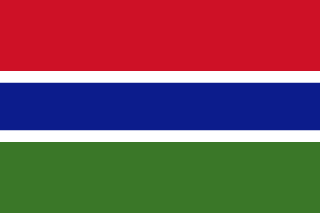
The river and the states
The Gambia River was a highway into the Sahel long before Europeans came, and the land along it lay within the orbit of the Mali Empire and later the Mandinka kingdoms of Kaabu. Mandinka, Wolof, Fula and Serahule communities traded gold, ivory and salt up and down the water. Griots — the hereditary keepers of history and music — remain central to Mandinka culture here.
The Portuguese arrived in the fifteenth century, followed by the British, who from 1651 built trading posts on the river. James Island, midstream, became a slave-trading fort. The river's upper reaches were a source of captives for the Atlantic trade, a history the world came to know through one Gambian family's oral tradition.
A country shaped by a river
British and French competition on the coast produced a peculiar border: Britain kept a narrow strip on either bank of the navigable river, while France took the surrounding country as Senegal. The result was a state defined entirely by the waterway, almost an enclave within its neighbour. Bathurst, later Banjul, grew up on an island at the river's mouth.
The Gambia became independent on 18 February 1965 and a republic in 1970, under Dawda Jawara, who governed for nearly three decades with a reputation for moderation and a functioning multiparty system — a rarity in the region. A brief attempt at union with Senegal, the Senegambia Confederation, lasted from 1982 to 1989 before collapsing.
Jammeh and the reckoning
In 1994 a young lieutenant, Yahya Jammeh, seized power in a coup and held it for 22 years. His rule mixed personality cult with real repression: claims to cure AIDS with herbs, witch-hunts, "disappeared" journalists and dissidents, and an announcement that the country was an Islamic republic. Many Gambians fled north across the Sahara and the Mediterranean — "the back way" — making the tiny country a large source of migrants to Europe.
In December 2016 Jammeh unexpectedly lost the election to Adama Barrow, a former security guard. He first conceded, then refused to go. In January 2017 an ECOWAS military force, led by Senegal, moved in, and Jammeh flew into exile in Equatorial Guinea. A Truth, Reconciliation and Reparations Commission has since documented the crimes of his years, and Barrow has won re-election, though reckoning with the past remains unfinished.
Roots, the coast and the nut
The Gambia's history reached a global audience through one book. Alex Haley traced his American family to Kunta Kinteh, said to have been seized near the village of Juffureh and shipped into slavery; Roots and the island in the river, now a World Heritage site, made the tiny country a place of pilgrimage for the African diaspora.
Today it sells itself as the "Smiling Coast", drawing European package tourists to a short strip of Atlantic beach that anchors the economy alongside groundnuts — the peanut monoculture the British built and the country never escaped. Kora players and griots keep the older Mandinka arts alive upriver, while the water that defines the state remains its spine, a corridor of mangrove and birdlife pushing deep into Senegal.