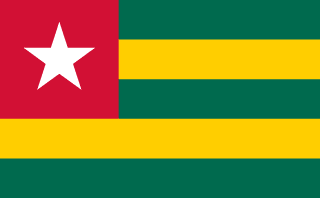
The model colony
Before Europe arrived, the area was a patchwork of peoples — the Ewe in the south, the Kabye and others in the north — without a single dominant kingdom, sitting between the powerful states of Dahomey and Asante. The coast around Aného and Lomé traded with Europeans, including in slaves.
In 1884 Germany made Togoland a protectorate and set out to run it as a Musterkolonie, a "model colony", building railways and plantations on the backs of forced labour. The First World War ended that: Britain and France divided Togoland between them, and the French portion became modern Togo, while the British part eventually joined Ghana — splitting the Ewe people across a border to this day.
Olympio and the coup
Independence came on 27 April 1960 under Sylvanus Olympio, an Ewe businessman and nationalist who kept his distance from France. On 13 January 1963 he was killed outside the US embassy in Lomé by soldiers demobilised from the French army — among them a young sergeant, Gnassingbé Eyadéma, who later boasted of firing the fatal shots. It was independent Africa's first military coup.
After a period of civilian rule Eyadéma seized full power in a bloodless 1967 coup and built a personality cult and a one-party state around himself, funded by the country's phosphate mines. He crushed dissent, survived a plane crash he turned into myth, and ruled until his death in February 2005.
The dynasty continues
The army immediately installed Eyadéma's son Faure Gnassingbé, in breach of the constitution; under regional pressure he stood in a disputed election months later and won amid violence that killed hundreds and sent tens of thousands fleeing to neighbouring states.
Faure has governed ever since through repeated contested polls and periodic protest crackdowns. In 2024–25 his government pushed through a constitutional change to a parliamentary system, abolishing the direct presidential election and creating a powerful new role of "President of the Council of Ministers" that could let him stay in office indefinitely — a manoeuvre critics called a constitutional coup to entrench the family's six-decade hold on power.
A sliver of a country
Togo is one of Africa's narrowest states, a ribbon barely a hundred kilometres wide that runs some 550 kilometres inland from a short Atlantic coast. That shape splits the Ewe between Togo and Ghana and packs in a striking variety — palm beaches at Lomé, and in the north the tata-somba fortress houses of the Batammariba in the Koutammakou hills, a World Heritage landscape.
The economy rests on phosphates, of which Togo is a significant producer, and on the port of Lomé, a deepwater hub that has made the capital a regional shipping and banking centre. Lomé's Akodesséwa fetish market, a vast open-air pharmacy of Vodun charms and dried animal parts, is among the most extraordinary and least genteel sights in the region.