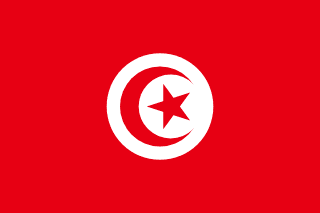
Flag of Tunisia

Tunisia

North Africa · Republic · Independent 1956

Tunisia is small, old, and used to mattering more than its size suggests. It was Carthage, the power that nearly beat Rome; it was one of the first centres of Islam in Africa; and in 2011 a fruit-seller's death here lit a fire that ran across the Arab world. It is the country that made the Arab Spring — and, more quietly, the one place that kept a democracy from it, at least for a while.

CapitalTunis
PopulationAbout 12 million
Official languageArabic
Also spokenTunisian Arabic (Derja), French
CurrencyTunisian dinar (TND)
Independence20 March 1956 (from France)

Carthage

The Phoenicians founded Carthage on the bay of Tunis around 814 BCE, and it grew into the great maritime and trading power of the western Mediterranean. Its quarrel with Rome produced the Punic Wars and Hannibal, who crossed the Alps with elephants and spent fifteen years loose in Italy without ever taking Rome. Rome won in the end, razed Carthage in 146 BCE, and then rebuilt it as the capital of Roman Africa — the breadbasket that fed the empire. The amphitheatre at El Djem, which seated thousands, is what that wealth left behind.

Kairouan and the Muslim centuries

The Arab conquest reached here in the seventh century, and in 670 the general Uqba ibn Nafi founded Kairouan — the first great Muslim city in the Maghreb and, for a time, the base from which Islam spread west across North Africa. Its Great Mosque is one of the oldest in the world, and Kairouan became a holy city in its own right.

A succession of dynasties followed — Aghlabids, Fatimids, Zirids, Hafsids — before the Ottomans took the coast in the sixteenth century and ruled it through local beys. By the nineteenth century the beys had borrowed Tunisia into bankruptcy, and in 1881 France moved in and made it a protectorate.

Bourguiba's republic

Independence came in 1956 under Habib Bourguiba, and few post-colonial leaders remade a country as deliberately. Within months he pushed through the Code of Personal Status, which banned polygamy, gave women the right to divorce, and set a floor on the age of marriage — the most far-reaching reform of women's legal status in the Arab world, and still the thing Tunisians point to when they distinguish themselves from their neighbours.

Bourguiba was also autocratic, secularising by decree, and eventually senile in office. In 1987 his prime minister Zine El Abidine Ben Ali removed him in a bloodless coup declared on medical grounds. Ben Ali then ran a police state for twenty-three years, prosperous on the surface and rotten underneath.

The spark

On 17 December 2010, in the interior town of Sidi Bouzid, a street vendor named Mohamed Bouazizi set himself alight after police confiscated his cart. The protests that followed spread nationwide within weeks; on 14 January 2011 Ben Ali fled to Saudi Arabia. Tunisia had started the Arab Spring, and unlike the uprisings it inspired elsewhere it produced an actual transition — a new constitution in 2014 and a Nobel Peace Prize in 2015 for the civil-society quartet that brokered it.

The democracy struggled to deliver jobs, and in 2021 President Kais Saied, elected two years earlier, suspended parliament and assumed sweeping powers, remaking the constitution in 2022 to concentrate authority in the presidency. Whether the one success story of the Arab Spring has survived is now an open question, and a bitter one.

c. 814 BCEThe Phoenicians found Carthage.
146 BCERome destroys Carthage, then rebuilds it as the capital of Roman Africa.
670 CEUqba ibn Nafi founds Kairouan, the first great Muslim city in the Maghreb.
16th c.The Ottomans take the coast and rule through local beys.
1881France imposes a protectorate.
195620 March — independence under Habib Bourguiba.
1956The Code of Personal Status transforms women's legal rights.
1957The monarchy is abolished; Tunisia becomes a republic.
1987Ben Ali removes Bourguiba in a bloodless coup.
201017 December — Mohamed Bouazizi sets himself alight in Sidi Bouzid.
201114 January — Ben Ali flees. The Arab Spring is under way.
2014A new democratic constitution is adopted.
2015The National Dialogue Quartet wins the Nobel Peace Prize.
2021President Kais Saied suspends parliament and assumes broad powers.
2022A new constitution concentrates authority in the presidency.

Humat al-Hima (Defenders of the Homeland)

The anthem borrows its most famous lines from the Tunisian poet Aboul-Qacem Echebbi, whose verse "If the people one day will to live, then destiny must respond" became a slogan far beyond Tunisia during the Arab Spring. Used at independence, dropped, and restored after the 1987 coup, it is a defiant, martial song whose words outran the state that adopted them.

Full lyrics and translation → — held off-site deliberately. Anthem texts are official state documents in some countries and still in copyright in others, and Ananse would rather link than guess wrong on either.

Words Mustafa Sadik al-Rafi'i and Aboul-Qacem Echebbi. Music Mohamed Abdel Wahab. Adopted 1957, readopted 1987.

The recording plays through YouTube's own player and belongs to Urumaxi Anthems, who published it — Ananse does not host or restream it. Every anthem in the Atlas is checked against YouTube's own record before embedding, and must carry the country's name in the published title.

What Tunisia is known for

Each place links out to a fuller account. Ananse does not photograph these sites itself yet — when it does, the pictures here will be its own.

Tunisia on the wire

Live from the Ananse newsroom, refreshed every 30 minutes.

Loading…

← All countries