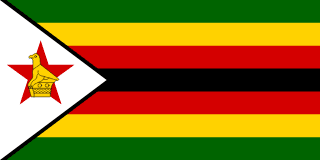
The houses of stone
Great Zimbabwe — dzimba dza mabwe, houses of stone — was the capital of a wealthy state between roughly the eleventh and fifteenth centuries, trading gold and ivory to the Swahili coast and beyond. Its dry-stone walls, built without mortar, are the largest ancient structures in sub-Saharan Africa outside the Nile valley. Colonial authorities spent years insisting foreigners must have built it; the evidence never supported them, and the state took the name of the place at independence.
The Kingdom of Mutapa succeeded it, feeding gold into the Portuguese trade at Sofala, and the Rozvi after that. In the 1830s, during the upheavals of the Mfecane, Mzilikazi led the Ndebele north and founded a kingdom in the west around Bulawayo. Lobengula was its last king.
Rhodes, and a rebellion refused
In 1890 the Pioneer Column of Rhodes's British South Africa Company planted a fort where Harare now stands. The Shona and Ndebele rose against company rule in 1896 to 1897 — the First Chimurenga — and were crushed; the spirit medium Nehanda, hanged in 1898, became a figure the later liberation war would invoke by name.
The colony, Southern Rhodesia, became one of the most entrenched settler states in Africa. In 1965 its white government under Ian Smith declared independence unilaterally rather than accept majority rule, and held out under sanctions for fourteen years.
The war, and Gukurahundi
The Second Chimurenga — the bush war of the 1970s — was fought by two guerrilla movements: Robert Mugabe's ZANU, largely Shona, and Joshua Nkomo's ZAPU, largely Ndebele. The Lancaster House agreement in 1979 brought majority rule, and Zimbabwe became independent on 18 April 1980 with Mugabe as prime minister.
Then, between 1983 and 1987, the state turned on Matabeleland. A North Korean-trained army unit, the Fifth Brigade, killed civilians across the Ndebele-speaking west in a campaign the government called Gukurahundi. Estimates of the dead are commonly put around 20,000; the true figure is disputed and the record was deliberately obscured. It has never been properly accounted for, and it is the wound under everything that followed.
Land, money, and the coup that changed nothing much
From 2000 the government backed the often violent seizure of white-owned commercial farms. The grievance was real — land ownership was grotesquely skewed by conquest — but the execution wrecked agricultural output and, with it, the economy. By 2008 Zimbabwe had one of the worst hyperinflations ever recorded; the government eventually printed a hundred-trillion-dollar note and then abandoned its own currency for the US dollar. A brief unity government with Morgan Tsvangirai's MDC, forced by the violent 2008 election, steadied the money but not the politics, and dissolved once ZANU-PF had recovered its footing.
Mugabe ruled until November 2017, when the army removed him in a coup its authors declined to call one. His deputy, Emmerson Mnangagwa — a central figure in Gukurahundi — took over promising a new era. The dollar problem, the debt and the repression largely stayed put. A new gold-backed unit, the ZiG, arrived in 2024 as the latest attempt to have a currency at all, and it too began losing value almost immediately.