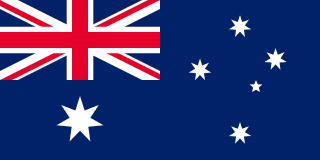
Flag of Australia

Australia

Oceania · Federal Parliamentary Monarchy · Federated 1901

The only country that is also a continent, Australia has been home to Aboriginal and Torres Strait Islander peoples for tens of thousands of years — among the oldest continuous cultures on earth. British colonisation from 1788 built a modern settler nation on that ancient land, and the country is still working through what that history means for the peoples who were here first.

CapitalCanberra
Largest citySydney
PopulationAbout 27 million
Official languageEnglish (de facto)
Also spokenMandarin, Arabic, Aboriginal languages
CurrencyAustralian dollar (AUD)
Federation1 January 1901

The oldest cultures on earth

Aboriginal Australians have lived on the continent for at least 65,000 years, developing hundreds of distinct nations, languages and law systems, and a spiritual understanding of country often called the Dreaming. Torres Strait Islanders, a Melanesian people, live in the islands to the north. These are the longest continuous human cultures known anywhere.

British colonisation began in 1788 with a penal settlement at Sydney. It came without treaty, on the legal fiction of terra nullius — land belonging to no one — and brought dispossession, frontier violence and disease that killed a large part of the Indigenous population. The theft of children from Aboriginal families, the Stolen Generations, continued into the 1970s.

A nation and its reckoning

Six British colonies federated into the Commonwealth of Australia on 1 January 1901. The new nation entrenched a White Australia policy restricting non-European immigration, dismantled only in the 1960s and 1970s, after which Australia became one of the most multicultural societies in the world, including growing African communities, many from Sudan, Somalia and the Horn.

The reckoning with Indigenous history has been slow and contested. A 1967 referendum let Aboriginal people be counted and legislated for; the Mabo judgment of 1992 overturned terra nullius and recognised native title; a national apology for the Stolen Generations came in 2008. In 2023 a referendum on an Indigenous Voice to Parliament — an advisory body written into the constitution — was defeated, leaving the question of recognition unresolved.

Mining, cities and the world

Australia is a wealthy economy built heavily on natural resources — iron ore, coal, gas and gold — and its mining giants, BHP and Rio Tinto, are among the largest in the world, with operations across Africa in copper, iron and other minerals. Most Australians live in a handful of coastal cities, chiefly Sydney and Melbourne, on one of the driest inhabited continents.

A constitutional monarchy sharing a head of state with Britain, Australia is closely tied to the United States and increasingly focused on its Asian neighbourhood. It grapples with climate change — drought, bushfire and coral bleaching on the Great Barrier Reef — and with its place between an Anglo past and a Pacific and Asian future.

c. 65,000 years agoAboriginal peoples settle the continent
1770James Cook charts the east coast
1788The First Fleet founds a penal colony at Sydney
1850sGold rushes draw mass immigration
1 January 1901Federation of the Commonwealth of Australia
1901The White Australia policy adopted
1967Referendum counts Aboriginal people in the census
1970sThe last removals of the Stolen Generations end
1992The Mabo ruling recognises native title
2008National apology to the Stolen Generations
2020Catastrophic Black Summer bushfires
2023The Indigenous Voice referendum is defeated

Advance Australia Fair

Written in the 1870s, it replaced God Save the Queen as the national anthem in 1984 after a plebiscite. In 2021 the opening lines were amended from young and free to one and free, a small change meant to acknowledge that the country's human history stretches back tens of thousands of years, not merely to 1788.

Full lyrics and translation → — held off-site deliberately. Anthem texts are official state documents in some countries and still in copyright in others, and Ananse would rather link than guess wrong on either.

Words Peter Dodds McCormick. Music Peter Dodds McCormick. Adopted in 1984.

The recording plays through YouTube's own player and belongs to JR videos, who published it — Ananse does not host or restream it. Every anthem in the Atlas is checked against YouTube's own record before embedding, and must carry the country's name in the published title.

What Australia is known for

Each place links out to a fuller account. Ananse does not photograph these sites itself yet — when it does, the pictures here will be its own.

Australia on the wire

Live from the Ananse newsroom, refreshed every 30 minutes.

Loading…

← All countries