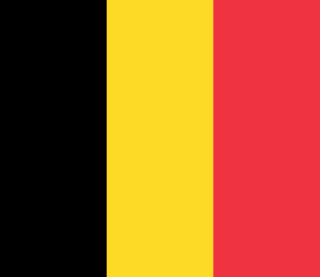
A country invented in 1830
Belgium broke away from the Netherlands in 1830 and was recognised as a neutral kingdom, a buffer between the great powers. It industrialised early, its coal and steel among the first on the continent, but its neutrality was twice violated by German invasion, in 1914 and 1940, making its fields the graveyards of two world wars. Post-war it became a founder of the European communities, and Brussels grew into the de facto capital of Europe.
At home the country is defined by its linguistic divide. Flanders and Wallonia run much of their own affairs, national governments take months to form, and the survival of the Belgian state itself is a recurring question. In 2025 the Flemish nationalist Bart De Wever became prime minister at the head of a fractious coalition.
The Congo: a private empire of terror
Belgium's darkest chapter belonged, at first, not to the state but to one man. From 1885 King Leopold II ran the Congo Free State as his personal property, a rubber and ivory regime enforced by mutilation, hostage-taking and forced labour that killed millions; the severed hands of the Congo became a byword for colonial atrocity. International outrage forced Belgium to take the colony over in 1908, but the exploitation continued under the state until independence in 1960.
That independence was poisoned at birth. Within months the elected prime minister, Patrice Lumumba, was overthrown and, in January 1961, murdered with Belgian and Western complicity. In 2002 Belgium formally apologised for its role in his killing, and in 2022 it returned a gold-crowned tooth, the only physical remains of Lumumba, to his family. The AfricaMuseum at Tervuren, built by Leopold to glorify his empire, reopened in 2018 after a long redesign meant to confront rather than celebrate that past, though many say the reckoning is only half done and the looted objects largely remain.
The capital of Europe
For all its internal divisions, Belgium sits at the centre of European power: the European Commission, Council and Parliament, and NATO, all headquarter in Brussels, a genuinely international and multilingual city with a large Congolese community in its Matonge quarter. The country remains a byword for compromise, chocolate, beer and comics, and for a political system that somehow functions despite predicting its own collapse for decades.