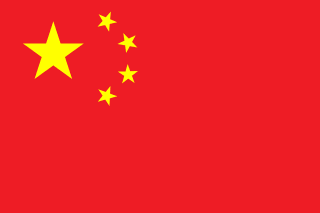
The Middle Kingdom
Chinese states were unified under the Qin in 221 BCE, giving the country its first emperor and a template of centralised bureaucracy that outlasted every dynasty that followed. The Han, Tang and Song presided over inventions the rest of the world would borrow for centuries: paper, printing, the compass and gunpowder.
For most of the period before 1800 China was among the largest economies on earth. The imperial examination system recruited officials by written test rather than birth, and the emperor ruled, in theory, by a Mandate of Heaven that could be withdrawn if he governed badly.
Zheng He and the giraffe
Between 1405 and 1433 the Ming admiral Zheng He led seven vast treasure-fleet voyages across the Indian Ocean. In the 1410s and 1420s his ships reached the Swahili coast — Malindi, Mombasa and the trading towns of what is now Kenya and Tanzania — decades before Portuguese caravels arrived. A giraffe carried back to the Ming court in 1414 was received as an auspicious beast.
That memory now frames a much larger present. China became Africa's largest bilateral trading partner in 2009. The Forum on China–Africa Cooperation, launched in 2000, meets every three years; the Belt and Road Initiative, announced in 2013, financed ports, dams and railways from the TAZARA line built between 1970 and 1975 to the Addis Ababa–Djibouti railway of 2016–18.
The relationship is argued over honestly. Chinese loans built infrastructure African governments could not raise elsewhere; critics point to opaque terms, imported labour and debts owed to Chinese lenders. Defenders note that Western institutions had declined the same projects, and that African states signed the contracts as sovereign borrowers. Both things are true.
Revolution and reform
The last dynasty fell in 1911. Decades of warlordism, Japanese invasion and civil war ended when Mao Zedong's Communists proclaimed the People's Republic on 1 October 1949. The Great Leap Forward and the Cultural Revolution brought famine and upheaval; tens of millions died.
After Mao's death in 1976, Deng Xiaoping's reforms from 1978 opened the economy to markets and foreign investment. Four decades of near-double-digit growth lifted hundreds of millions out of poverty and made China the world's second-largest economy, a one-party state governing a consumer society.