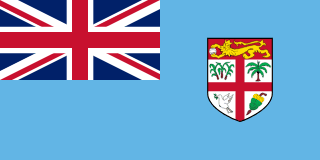
Flag of Fiji

Fiji

Oceania · Republic · Independence 1970

An archipelago of around 330 islands in the South Pacific, Fiji is home to two great communities: Indigenous Fijians of Melanesian and Polynesian descent, and Indo-Fijians, the descendants of Indian labourers brought under British indenture. That history has shaped its politics ever since, through independence and a series of coups, on some of the most beautiful coasts in the world.

CapitalSuva
Largest citySuva
PopulationAbout 930,000
Official languagesEnglish, Fijian, Fiji Hindi
Also spokenRotuman
CurrencyFijian dollar (FJD)
Independence10 October 1970

Islands and a chiefly order

Fiji was settled some 3,000 years ago by the Lapita people, seafarers whose distinctive pottery marks the Austronesian expansion across the Pacific, and later by further Melanesian and Polynesian migration. Fijian society developed around powerful chiefs, elaborate custom and, in the accounts of early Europeans, warfare fierce enough to earn the group the name the Cannibal Isles.

In 1874 the paramount chief Cakobau ceded Fiji to Britain, and it became a Crown colony. The British ruled in part through the chiefly system, and set aside most land as inalienable Indigenous property — a settlement whose legacy still underpins Fijian land tenure and politics today.

The girmitiyas

To work the sugar plantations without disturbing Fijian land and labour, the British brought indentured workers from India between 1879 and 1916 — more than 60,000 people, known as girmitiyas after the "girmit", the agreement they signed. They endured harsh conditions on five-year contracts, and most stayed, building a community that by the twentieth century rivalled the Indigenous Fijians in number.

It is the same system of indenture that carried Indians to Natal, Mauritius, Trinidad and Guyana after the abolition of slavery — a global movement of coerced and contracted labour that reshaped societies from the Caribbean to the Indian Ocean and East Africa. In Fiji it produced a lasting ethnic division that colonial rule did little to bridge, and that independence inherited whole.

Coups and republic

Fiji became independent in 1970. The unresolved tension between the two communities erupted in 1987, when an Indo-Fijian-supported government was overthrown in two military coups; Fiji left the Commonwealth and declared a republic. Further coups followed in 2000 and 2006, each deepening the quarrel over who the nation belonged to, and many Indo-Fijians emigrated.

A new constitution in 2013 and elections in 2014 restored civilian rule, and power has since changed hands peacefully. The economy leans on tourism, sugar and remittances, and Fiji has become a leading Pacific voice on climate change, its low-lying neighbours among the most exposed on earth to a rising sea.

c. 1000 BCELapita seafarers settle the islands
1643Abel Tasman sights Fiji
1874Cakobau cedes Fiji to Britain
1879 · 1916Indentured Indian labourers, the girmitiyas, arrive
10 October 1970Independence from Britain
1987Two military coups; Fiji becomes a republic
2000A civilian-led coup and hostage crisis
2006Bainimarama seizes power in a fourth coup
2013A new constitution is promulgated
2014Elections restore civilian government
2022Sitiveni Rabuka becomes prime minister

God Bless Fiji

Adopted at independence in 1970, its English words were set to a melody drawn from an old hymn tune. A Fijian-language version, Meda Dau Doka, is also sung, and the two are not direct translations of each other; the English text has at times been criticised for its colonial and Christian framing in a country of more than one faith and people.

Full lyrics and translation → — held off-site deliberately. Anthem texts are official state documents in some countries and still in copyright in others, and Ananse would rather link than guess wrong on either.

Words Michael Francis Alexander Prescott. Music Adapted from a hymn by Charles Austin Miles. Adopted in 1970.

The recording plays through YouTube's own player and belongs to DN Anthems, who published it — Ananse does not host or restream it. Every anthem in the Atlas is checked against YouTube's own record before embedding, and must carry the country's name in the published title.

What Fiji is known for

Each place links out to a fuller account. Ananse does not photograph these sites itself yet — when it does, the pictures here will be its own.

Fiji on the wire

Live from the Ananse newsroom, refreshed every 30 minutes.

Loading…

← All countries