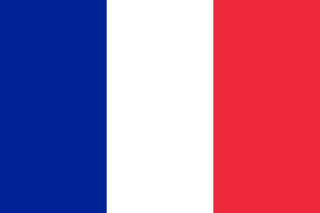
Flag of France

France

Western Europe · Republic · Fifth Republic 1958

A hexagon of vineyards, mountains and river valleys anchoring western Europe, France gave the world the idea of the republic, the metric system and the rights of man, then spent two centuries building an empire that contradicted every word of it. It remains a nuclear power, a founder of the European Union, and the former ruler of a swathe of Africa that still uses its language, its currency arrangements and, often, its troops.

CapitalParis
Largest cityParis (about 2.1 million; 11 million metro)
PopulationAbout 68 million
Official languageFrench
CurrencyEuro (EUR)
RepublicFifth Republic, 1958
GovernmentSemi-presidential republic

Kingdom, revolution, republic

Roman Gaul became the Frankish kingdom, and by the Middle Ages France was Europe's most populous and powerful state, ruled by an absolute monarchy that reached its apogee under Louis XIV at Versailles. In 1789 the Revolution swept it away, proclaiming liberty, equality and fraternity and the Declaration of the Rights of Man. Napoleon turned the republic into an empire and conquered much of Europe before his fall in 1815.

The nineteenth and twentieth centuries were a cycle of republics, empires and restorations, two devastating world wars fought largely on French soil, and occupation by Nazi Germany from 1940 to 1944. The current Fifth Republic, with its strong presidency, was designed by Charles de Gaulle in 1958 amid the crisis of the Algerian war.

The empire and its long shadow over Africa

France codified slavery in the Code Noir of 1685 and worked the plantations of Saint-Domingue, the richest colony in the world, until the enslaved rose and founded Haiti in 1804. In 1825 France forced Haiti to pay an indemnity for its own freedom, a debt that crippled the young state for over a century. In Africa, France ruled from Senegal to Congo, recruited hundreds of thousands of tirailleurs sénégalais to fight its wars, and in December 1944 massacred returning West African veterans at Thiaroye near Dakar when they demanded their pay.

Independence in 1960 did not end the relationship. The CFA franc, pegged first to the French franc and now the euro, still governs the currencies of fourteen African states, its reserves long held in Paris. French troops have intervened repeatedly from Côte d'Ivoire to Mali, and the recent expulsions of those troops from Mali, Burkina Faso and Niger mark a real turn against Françafrique. On restitution, the 2021 Sarr–Savoy report pushed France to return 26 looted treasures to Benin, from the royal palaces of Abomey, a first crack in a very old wall.

A diverse, contested republic

France is home to one of Europe's largest populations of African and North African descent, concentrated in the banlieues that ring its cities, and the tension between the republic's official colour-blindness and the lived reality of those suburbs erupts periodically, as in the 2005 and 2023 riots. Emmanuel Macron, president since 2017, governs a divided country where the far right of Marine Le Pen has never been stronger. France's football team, world champions in 1998 and 2018, is the clearest picture the country has of itself: overwhelmingly the children of its former empire.

c. 500The Frankish kingdom takes shape under Clovis.
1685The Code Noir regulates slavery in the French colonies.
1789The French Revolution begins.
1804Haiti wins independence after the only successful slave revolution.
1825France extracts an indemnity from Haiti for its freedom.
1848France abolishes slavery in its colonies for good.
1884 · 1885France a leading power at the Berlin Conference.
1944French forces massacre West African veterans at Thiaroye.
1958De Gaulle founds the Fifth Republic amid the Algerian war.
1960Most of French Africa becomes independent.
1962Algeria wins independence after a brutal war.
2021The Sarr–Savoy process returns 26 treasures to Benin.
2022 · 2023French troops are expelled from Mali, Burkina Faso and Niger.
2024A snap election leaves the National Assembly deadlocked.

La Marseillaise

Written in a single night in 1792 as a war song for the army of the Rhine, it took its name from the volunteers of Marseille who sang it into Paris. Its blood-soaked verses have troubled commentators ever since, but as a revolutionary hymn it has been borrowed by protest movements the world over, including anti-colonial ones that turned it back against France.

Full lyrics and translation → — held off-site deliberately. Anthem texts are official state documents in some countries and still in copyright in others, and Ananse would rather link than guess wrong on either.

Words Claude Joseph Rouget de Lisle. Music Claude Joseph Rouget de Lisle. Adopted 1795 (readopted 1879).

The recording plays through YouTube's own player and belongs to Ingen, who published it — Ananse does not host or restream it. Every anthem in the Atlas is checked against YouTube's own record before embedding, and must carry the country's name in the published title.

What France is known for

Each place links out to a fuller account. Ananse does not photograph these sites itself yet — when it does, the pictures here will be its own.

France on the wire

Live from the Ananse newsroom, refreshed every 30 minutes.

Loading…

← All countries