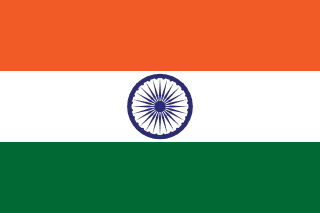
Flag of India

India

South Asia · Federal Republic · Independent 1947

A subcontinent of more than a billion and a half people, hundreds of languages and every major religion, India has been a crossroads of trade and ideas for millennia. It gave the world the concept of zero, the Buddha and the philosophy of non-violent resistance, and it won its freedom in 1947 in a movement that reshaped how colonised peoples everywhere imagined liberty.

CapitalNew Delhi
Largest cityMumbai
PopulationAbout 1.44 billion
Official languagesHindi and English
Also spokenBengali, Telugu, Marathi, Tamil and many more
CurrencyIndian rupee (INR)
Independence15 August 1947

Cities, empires and faiths

The Indus Valley civilisation built planned brick cities with drainage as early as 2600 BCE. Over the following millennia the subcontinent produced the Maurya and Gupta empires, the mathematics of zero and the decimal system, and four world religions — Hinduism, Buddhism, Jainism and Sikhism.

From the sixteenth century the Mughals ruled much of the north, leaving the Taj Mahal and a fusion of Persian and Indian art. European trading companies followed the wealth, and by the nineteenth century the British Crown governed the whole subcontinent as the jewel of its empire.

The ocean and the diaspora

India's ties to Africa predate Europe by centuries. Monsoon-driven dhow trade linked Gujarat and the Malabar coast to Zanzibar, Mombasa and the Swahili towns, carrying cloth, beads and spices long before the Portuguese arrived. From 1860 the British shipped indentured Indian labourers to the sugar plantations of Natal, and later to build the Uganda Railway.

It was in South Africa, where he arrived in 1893 and stayed twenty-one years, that a young lawyer named Mohandas Gandhi developed satyagraha, the method of non-violent resistance he would carry home. Indian trading communities took root across East and Southern Africa — until, in 1972, Idi Amin expelled tens of thousands of Asians from Uganda, most holding British passports.

The connection continues in medicine. Indian firms such as Cipla broke the price of antiretroviral drugs in 2001, and India remains the source of a large share of the affordable generic medicines that African health systems depend on. India helped found the Non-Aligned Movement, and still presents itself as a leader of the Global South.

Freedom, partition and the republic

The independence movement, led by the Indian National Congress and figures such as Gandhi and Nehru, won freedom on 15 August 1947 — but at the cost of partition into India and Pakistan, which uprooted millions and killed perhaps a million in communal violence.

India adopted a democratic constitution in 1950, championed by B. R. Ambedkar, that abolished untouchability in law. It has held regular elections ever since, liberalised its economy from 1991, and grown into a hub of software, space launches and cinema, while grappling with poverty, caste and religious tension.

c. 2600 BCEIndus Valley cities flourish
c. 322 BCEMaurya empire founded; Ashoka spreads Buddhism
c. 100 CEIndian Ocean trade links to the East African coast
1526Babur founds the Mughal empire
1858British Crown assumes direct rule after the 1857 rebellion
1893Gandhi arrives in South Africa
1885Indian National Congress founded
15 August 1947Independence and partition
1950Republic; constitution comes into force
1961India among the founders of the Non-Aligned Movement
1991Economic liberalisation begins
2023India becomes the world's most populous country

Jana Gana Mana

Written in Bengali by the Nobel laureate Rabindranath Tagore and first sung in 1911, the song praises the guiding spirit of the Indian people. Because it was performed at a session held during a royal visit, critics long claimed it flattered King George V; Tagore rejected the reading, insisting the dispenser of India's destiny it invokes was never a mortal king.

Full lyrics and translation → — held off-site deliberately. Anthem texts are official state documents in some countries and still in copyright in others, and Ananse would rather link than guess wrong on either.

Words Rabindranath Tagore. Music Rabindranath Tagore. Adopted in 1950.

The recording plays through YouTube's own player and belongs to Duke of Canada, who published it — Ananse does not host or restream it. Every anthem in the Atlas is checked against YouTube's own record before embedding, and must carry the country's name in the published title.

What India is known for

Each place links out to a fuller account. Ananse does not photograph these sites itself yet — when it does, the pictures here will be its own.

India on the wire

Live from the Ananse newsroom, refreshed every 30 minutes.

Loading…

← All countries