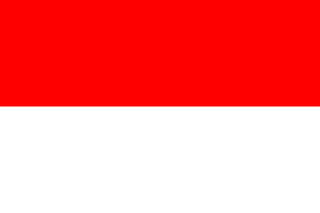
Flag of Indonesia

Indonesia

South-East Asia · Republic · Independent 1945

Some seventeen thousand islands strung along the equator, Indonesia is the world's largest archipelagic state and its most populous Muslim-majority country. A land of volcanoes, rainforest and more than seven hundred languages, it was united first by the spice trade, then by Dutch colonialism, and finally by a nationalist revolution that declared independence in 1945.

CapitalJakarta (moving to Nusantara)
Largest cityJakarta
PopulationAbout 280 million
Official languageIndonesian
Also spokenJavanese, Sundanese and hundreds more
CurrencyIndonesian rupiah (IDR)
IndependenceDeclared 17 August 1945

Empires of the spice islands

Long before Europe arrived, powerful states rose in the archipelago: the maritime empire of Srivijaya, and Majapahit, whose reach in the fourteenth century is a touchstone of Indonesian nationalism. Hindu and Buddhist kingdoms left the great temples of Borobudur and Prambanan, before Islam spread through the islands by trade from the thirteenth century.

The spices of the Moluccas — nutmeg, cloves, mace — drew the world. The Dutch East India Company seized control of the trade in the seventeenth century, and by the nineteenth the Netherlands ruled the whole archipelago as the Dutch East Indies, growing rich on forced cultivation of coffee, sugar and indigo.

Bandung and the Non-Aligned world

Sukarno declared independence in 1945, and after four years of armed struggle the Dutch conceded in 1949. Indonesia's most lasting contribution to the wider decolonising world came in 1955, when it hosted the Asian-African Conference in the city of Bandung. Twenty-nine newly independent and soon-to-be independent nations met to reject colonialism and Cold War alignment alike.

Bandung was the seedbed of the Non-Aligned Movement, formally launched at Belgrade in 1961. Ghana was not yet independent in 1955 and so was not at Bandung, but Kwame Nkrumah became one of the movement's architects, and the Bandung spirit — solidarity among the colonised, a third way between the superpowers — ran directly into the pan-Africanism of the era. It remains a shared reference point between Asia and Africa to this day.

Dictatorship, democracy and a new capital

In 1965 a murky coup and its aftermath brought General Suharto to power in a wave of anti-communist killings that took hundreds of thousands of lives. His New Order ruled for three decades until the financial crisis of 1998 forced him out, opening the way to democracy.

Indonesia today is a boisterous democracy and a G20 economy, still marked by inequality, corruption and separatist tension in Papua. It won independence for East Timor only under international pressure in 1999, and is now building a new capital, Nusantara, in Borneo to relieve a sinking, overcrowded Jakarta.

c. 800 CEBorobudur and Prambanan temples built in Java
c. 1290Islam takes hold through trade
1293 · 1500sThe Majapahit empire flourishes
1602The Dutch East India Company established
1800sThe Netherlands rules the whole archipelago
17 August 1945Sukarno declares independence
1949The Dutch recognise Indonesian sovereignty
1955The Bandung Asian-African Conference
1965 · 1966Mass killings bring Suharto to power
1998Suharto falls; democracy returns
1999East Timor votes to break away
2004The Indian Ocean tsunami devastates Aceh
2024Construction continues on the new capital, Nusantara

Indonesia Raya

Great Indonesia was written by the young musician Wage Rudolf Supratman and first performed in 1928 at the Youth Congress that produced the Youth Pledge, a founding moment of Indonesian nationalism. The Dutch authorities regarded it as subversive; it became the anthem of the republic on independence in 1945.

Full lyrics and translation → — held off-site deliberately. Anthem texts are official state documents in some countries and still in copyright in others, and Ananse would rather link than guess wrong on either.

Words Wage Rudolf Supratman. Music Wage Rudolf Supratman. Adopted in 1945.

The recording plays through YouTube's own player and belongs to BlueMarbleNations, who published it — Ananse does not host or restream it. Every anthem in the Atlas is checked against YouTube's own record before embedding, and must carry the country's name in the published title.

What Indonesia is known for

Each place links out to a fuller account. Ananse does not photograph these sites itself yet — when it does, the pictures here will be its own.

Indonesia on the wire

Live from the Ananse newsroom, refreshed every 30 minutes.

Loading…

← All countries