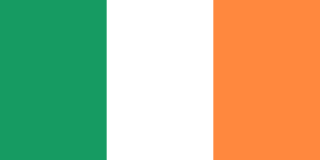
Flag of Ireland

Ireland

Northern Europe · Republic · Independence 1922

An island nation on the western edge of Europe, Ireland won independence from Britain in 1922 after centuries of colonial rule, famine and mass emigration. Once poor and priest-ridden, it transformed in a generation into a wealthy, socially liberal, English-speaking hub for global technology and pharmaceuticals. Its African connection is genuinely thinner than its neighbours', and its own experience of colonisation is a large part of the story.

CapitalDublin
Largest cityDublin (about 1.2 million metro)
PopulationAbout 5.3 million
Official languagesIrish, English
CurrencyEuro (EUR)
Independence1922
GovernmentParliamentary republic

Britain's first colony

Ireland was, in a real sense, the laboratory of English colonialism. Conquered and planted with settlers from the sixteenth century, its Catholic majority was dispossessed of land and barred from power under the Penal Laws. The Great Famine of 1845 to 1852, when the potato crop failed and a million people died while food was exported under British rule, seared the national memory and scattered millions across the world, above all to America.

A war of independence produced the Irish Free State in 1922, at the price of a partition that left six northern counties in the United Kingdom and a legacy of violence, the Troubles, that lasted until the Good Friday Agreement of 1998. The republic that emerged was long conservative and Catholic, but in a remarkable turn legalised divorce, same-sex marriage and abortion by popular vote within a single generation.

A thin thread, honestly drawn

Ireland never had an empire, and to claim a deep colonial entanglement with Africa would be false. The real links are different. Irish Catholic missionaries fanned out across Africa in the twentieth century, especially into Nigeria, where Irish orders built schools and hospitals and where the Biafran war of the late 1960s stirred deep Irish sympathy and aid. That missionary network gave Ireland an unusually personal connection to parts of the continent, for good and ill.

Irish people also took part in the British empire as soldiers, administrators and settlers, so the picture is not one of innocence. But many Irish nationalists drew an explicit line between their own struggle and Africa's: figures in the anti-apartheid movement, and the Dunnes Stores workers who refused to handle South African goods in 1984, made Ireland a notable voice against apartheid. Today Ireland runs a respected overseas aid programme, hosts a growing African diaspora, and remains one of the few EU states never to have ruled an African country.

The Celtic Tiger and after

From the 1990s Ireland used low corporate taxes and EU membership to lure the world's technology and pharmaceutical giants, Google, Apple, Pfizer, becoming one of Europe's richest countries per head, though the wealth is unevenly felt and housing is in crisis. Neutral in military terms, it stayed out of NATO, and its diaspora of some 70 million people worldwide gives a country of five million an influence far beyond its size. Simon Harris became taoiseach in 2024.

c. 432Christianity spreads in Ireland, tied to Saint Patrick.
1601English conquest is consolidated.
1801Ireland is merged into the United Kingdom.
1845 · 1852The Great Famine kills a million and scatters millions more.
1916The Easter Rising against British rule.
1922The Irish Free State is founded; the island is partitioned.
1949Ireland declares itself a republic.
1973Ireland joins the European Community.
1984Dunnes Stores workers strike against apartheid goods.
1990sThe Celtic Tiger boom transforms the economy.
1998The Good Friday Agreement largely ends the Troubles.
2015 · 2018Votes legalise same-sex marriage and abortion.
2024Simon Harris becomes taoiseach.

Amhrán na bhFiann (The Soldier's Song)

Written around 1910 as a marching song for Irish republicans, it was sung during the 1916 Rising and adopted by the Free State in 1926, replacing "God Save the King". Usually sung in Irish, its martial verses fit a state born of armed struggle, and its status is a rare point where the divided island's symbols still diverge.

Full lyrics and translation → — held off-site deliberately. Anthem texts are official state documents in some countries and still in copyright in others, and Ananse would rather link than guess wrong on either.

Words Peadar Kearney. Music Peadar Kearney and Patrick Heeney. Adopted 1926.

The recording plays through YouTube's own player and belongs to Ian Berwick, who published it — Ananse does not host or restream it. Every anthem in the Atlas is checked against YouTube's own record before embedding, and must carry the country's name in the published title.

What Ireland is known for

Each place links out to a fuller account. Ananse does not photograph these sites itself yet — when it does, the pictures here will be its own.

Ireland on the wire

Live from the Ananse newsroom, refreshed every 30 minutes.

Loading…

← All countries