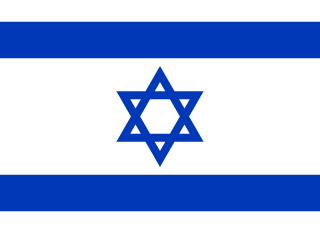
Ancient land, modern state
The land between the Jordan and the sea holds sites sacred to Judaism, Christianity and Islam, and was ruled in turn by Israelite kingdoms, Rome, the Islamic caliphates, Crusaders and the Ottomans. Jerusalem's Western Wall, Dome of the Rock and Church of the Holy Sepulchre stand within a few hundred metres of one another.
Modern Zionism, the movement for a Jewish homeland, grew in Europe from the late nineteenth century in response to persecution, and gathered force after the Holocaust. On 14 May 1948, as British rule ended, Israel declared independence; the war that followed created the state and displaced some 700,000 Palestinians in what they call the Nakba, the catastrophe.
A friendship made and broken
In the first years after independence, Israel courted the new states of Africa with unusual energy. Through its Mashav aid agency it sent agronomists, doctors and engineers, and trained thousands of Africans in irrigation, medicine and cooperative farming — a small country offering a model of rapid development to others just emerging from colonial rule. By the late 1960s it had ties with most of independent Africa.
The friendship broke over the wider conflict. After the 1973 war, and under pressure from Arab states and the oil weapon, most African governments severed relations with Israel; the Organisation of African Unity backed the Palestinian cause. Ties have slowly been rebuilt since, unevenly and amid controversy. A distinct strand is the Ethiopian Jewish community, the Beta Israel, most of whom were airlifted to Israel in operations such as Moses in 1984 and Solomon in 1991, and who have since navigated poverty and discrimination in their new country.
Conflict without end
Israel captured the West Bank, Gaza, East Jerusalem and the Golan Heights in 1967, and the fate of that territory has driven the conflict ever since. Peace was made with Egypt in 1979 and Jordan in 1994, and normalisation with several Gulf states came in 2020, but the core Palestinian question remains unresolved, through intifadas, failed negotiations and recurrent wars in Gaza.
Within its recognised borders Israel is a parliamentary democracy and a world leader in technology, water engineering and defence, home to a large Arab minority. It is also deeply divided — over religion and the state, over the occupation, and over the direction of its own democracy.