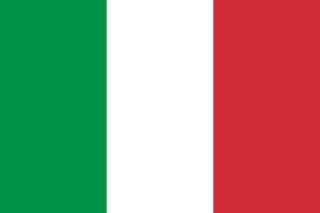
Flag of Italy

Italy

Southern Europe · Republic · Republic 1946

A boot-shaped peninsula reaching into the Mediterranean, Italy is the land of ancient Rome, the Renaissance and the Catholic Church, unified into a single state only in 1861. It is a founder of the European Union and one of the world's great cultural powers, yet a country of stark north-south divides. Its African story runs from a famous defeat at Adwa to a brutal invasion of Ethiopia to the migrant boats now landing on its southernmost shores.

CapitalRome
Largest cityRome (about 2.7 million)
PopulationAbout 59 million
Official languageItalian
CurrencyEuro (EUR)
RepublicSince 1946
GovernmentParliamentary republic

Rome, the Renaissance and a late unification

Ancient Rome built an empire that ringed the Mediterranean and shaped European law, language and religion for two millennia. After its fall Italy fractured into city-states, papal lands and foreign dominions, but those same city-states, Florence, Venice, Rome, drove the Renaissance that remade Western art and thought. Political unity came only in 1861, when the Risorgimento welded the peninsula into a kingdom.

The young state turned to fascism under Benito Mussolini from 1922, joined Hitler in the Second World War, and emerged defeated and, after a 1946 referendum, a republic. Post-war Italy became an industrial power and a founder of the European project, though it has cycled through dozens of governments and struggles with a persistent gap between a rich north and a poorer south.

Adwa, Ethiopia and the boats

Italy's African empire began in humiliation. In 1896 the army of Emperor Menelik II destroyed an invading Italian force at Adwa in northern Ethiopia, the most complete defeat of a European power by an African army in the colonial age and a victory that made Ethiopia a symbol of freedom across the Black world. Italy held Eritrea, Somalia and, later, Libya, but the wound of Adwa festered.

In 1935 Mussolini took his revenge, invading Ethiopia with aircraft and mustard gas in defiance of the League of Nations, whose failure to stop him helped destroy that body's credibility. Emperor Haile Selassie's appeal to the League became one of the twentieth century's great speeches. Italian rule was short and savage and ended in 1941. Today the Mediterranean makes Italy Africa's nearest European neighbour: the island of Lampedusa, closer to Tunisia than to Sicily, is the landing point for tens of thousands of migrants, and Italian politics is now dominated by the question of how to stop them.

Culture, industry and a hard-right turn

Italy remains a design and manufacturing power, from Ferrari and Fiat to the fashion houses of Milan, and it holds more UNESCO World Heritage sites than any other country. Its birth rate is among the lowest in the world, and its population is ageing and shrinking even as migration reshapes it. In 2022 Giorgia Meloni became prime minister at the head of a party with post-fascist roots, promising to curb migration while, in office, quietly seeking African labour her economy needs.

c. 753 BCThe traditional founding of Rome.
c. 1400 · 1600The Renaissance transforms art and thought.
1861Italy is unified into a single kingdom.
1896Ethiopia defeats Italy at the Battle of Adwa.
1922Mussolini and the fascists take power.
1935Italy invades Ethiopia with poison gas.
1941Italian rule in Ethiopia ends.
1946Italy becomes a republic.
1957Italy a founding member of the European project.
2013A Lampedusa shipwreck kills more than 360 migrants.
2022Giorgia Meloni becomes prime minister.
2020sItaly negotiates migration deals with North African states.

Il Canto degli Italiani

Written in 1847 by a young poet who died fighting for Italian unification, "Mameli's Hymn" was the song of the Risorgimento. Adopted provisionally when the republic was born, it was only made the official anthem by law in 2017. Its verses summon a scattered people to become one nation.

Full lyrics and translation → — held off-site deliberately. Anthem texts are official state documents in some countries and still in copyright in others, and Ananse would rather link than guess wrong on either.

Words Goffredo Mameli. Music Michele Novaro. Adopted 1946 (official since 2017).

The recording plays through YouTube's own player and belongs to Mattia von Sigmund, who published it — Ananse does not host or restream it. Every anthem in the Atlas is checked against YouTube's own record before embedding, and must carry the country's name in the published title.

What Italy is known for

Each place links out to a fuller account. Ananse does not photograph these sites itself yet — when it does, the pictures here will be its own.

Italy on the wire

Live from the Ananse newsroom, refreshed every 30 minutes.

Loading…

← All countries