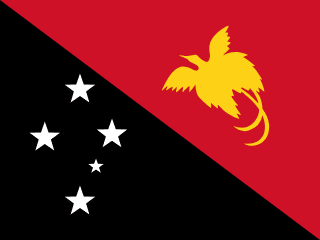
A land of many nations
People have lived on New Guinea for tens of thousands of years, and the highland valleys are among the earliest sites of agriculture anywhere, with cultivation at Kuk Swamp dating back some 9,000 years. Isolated by mountains and dense forest, communities developed in extraordinary variety: the more than 800 languages spoken here are roughly a tenth of all the languages on earth.
The population is overwhelmingly Melanesian, organised historically around clans and the wantok system of kin obligation. Highland societies, unknown to the outside world until the 1930s, built complex cultures around pigs, gardens and elaborate ceremony, and much of the country remains rural, its people living on customary land.
Blackbirding and colonial rule
In the second half of the nineteenth century, New Guinea was drawn into blackbirding — the trade in Pacific Islander labour, in which men were recruited, tricked or seized to work on plantations in Queensland, Fiji and Samoa, often in conditions close to slavery. It is a Pacific parallel to the coerced-labour histories of the Atlantic and Indian Ocean worlds, and it reshaped island societies across Melanesia.
The island was then carved up by empires: Germany took the north-east, Britain the south-east, and the Netherlands the west. Australia governed the eastern territories through both world wars — New Guinea saw brutal fighting along the Kokoda Track in 1942 — before leading them to independence in 1975. The western half remains part of Indonesia, where a separatist movement endures.
Resources and fragile politics
Papua New Guinea is rich in gold, copper, gas and timber, and resource projects dominate the formal economy, yet much of the population lives by subsistence farming and public services are thin. The Panguna copper mine on Bougainville helped trigger a long civil war; in 2019 Bougainville voted overwhelmingly for independence in a non-binding referendum, and its future status is still being negotiated.
Politics is fluid, with shifting coalitions and frequent votes of no confidence, and the state struggles with corruption, tribal conflict and urban crime. It sits at the centre of a strategic contest, courted by Australia, China and the United States, as a large and resource-rich nation finding its footing.