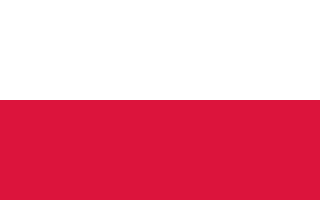
A country that refused to disappear
Poland was once one of Europe's largest states, a Polish-Lithuanian Commonwealth stretching across the continent's centre, before its neighbours, Russia, Prussia and Austria, carved it up entirely in the late eighteenth century. For 123 years there was no Polish state at all, only a Polish nation kept alive by language, faith and memory. It reappeared in 1918, only to be invaded from both sides in 1939 by Nazi Germany and the Soviet Union, occupied with exceptional brutality, and made the site of the Holocaust's largest killing centres, including Auschwitz.
The post-war communist state, imposed by Moscow, was challenged from within by the Solidarity movement, the trade union led by Lech Wałęsa that grew into a peaceful revolution and, in 1989, brought the whole Soviet bloc down with it. The Third Republic that followed joined NATO in 1999 and the European Union in 2004.
A colony it never had
Poland's African connection is genuinely slight, and the interesting fragment is a fantasy rather than a fact. In the 1930s, a newly independent and land-hungry Poland ran a pressure group, the Maritime and Colonial League, that agitated loudly for overseas colonies, coveted Madagascar and a slice of Africa, and even floated schemes to resettle Polish Jews abroad. Poland had no navy or empire to make any of it real, and the whole episode collapsed with the country in 1939. It is a reminder that colonial ambition was not confined to the powers that achieved it.
Beyond that, Poland took part in the communist bloc's technical and educational exchanges with newly independent African states, training some students and sending some experts, but never on the scale of the Soviet Union or East Germany. The sharper contemporary link is migration and its politics: Poland became a flashpoint of Europe's border debates, from the crisis on its Belarusian frontier to a governing rhetoric, under the former Law and Justice government, that was pointedly unwelcoming to arrivals from Africa and the Middle East even as it took in millions of Ukrainians. The pendulum swung again when Donald Tusk returned as prime minister in 2023.
Boom, faith and a culture war
Since 1989 Poland has been an economic success story, its output multiplying and its cities transformed, though many of its people left to work elsewhere in the EU. It remains one of Europe's most Catholic countries, and the tension between that conservatism and a young, urban, liberalising population has driven bitter fights over abortion, courts and the media. Its security politics are dominated by the country next door: Russia's war in Ukraine has made Poland a frontline state, a major arms buyer and the chief hub for Western support.