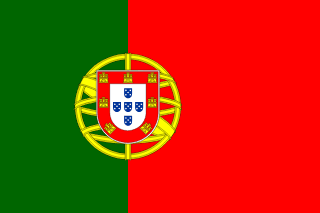
The oldest border in Europe
Portugal's frontiers have barely moved since the mid-thirteenth century, making it one of the oldest nation-states on the continent. In the fifteenth century, under Henry the Navigator, its caravels pushed down the African coast, seeking gold, ivory and a route to the Indies. Vasco da Gama reached India in 1498 and Pedro Álvares Cabral reached Brazil in 1500, opening the first global trading empire.
The empire faded as Brazil went independent in 1822, and at home a long dictatorship under António de Oliveira Salazar, the Estado Novo, ruled from 1933 to 1974, keeping Portugal poor, censored and clinging to its colonies while the rest of Europe decolonised.
First in, last out: Portugal and the slave trade
In 1482 the Portuguese built the fortress of São Jorge da Mina at Elmina, on the coast of present-day Ghana, the first permanent European structure in sub-Saharan Africa and soon a depot for gold and then human beings. Portugal opened the Atlantic slave trade in the fifteenth century and, over its long life, shipped more enslaved Africans, especially to Brazil, than any other nation. Its colonies of Angola, Mozambique, Guinea-Bissau, Cape Verde and São Tomé were the demographic engine of that trade.
When Salazar refused to let go, Africa forced the issue. Liberation movements, the MPLA in Angola, FRELIMO in Mozambique and the PAIGC of Amílcar Cabral in Guinea-Bissau, fought colonial wars from the 1960s that bled the Portuguese army and finally broke the dictatorship itself. On 25 April 1974 army officers overthrew the regime in the near-bloodless Carnation Revolution, and within a year the African colonies were free. The relationship did not end there: hundreds of thousands of Cape Verdeans, Angolans and Bissau-Guineans live in Portugal today, and Lisbon's music, food and football carry their mark.
A modern European state
Portugal joined the European Community in 1986 and adopted the euro, endured a punishing bailout after the 2011 debt crisis, and has since become a favoured destination for tourists, remote workers and retirees. It binds its former empire together through the Community of Portuguese Language Countries, and its footballers, from Eusébio, born in Mozambique, to Cristiano Ronaldo, remain among its most famous exports.
The reckoning is not finished. In April 2023 President Marcelo Rebelo de Sousa said Portugal should take responsibility for its role in transatlantic slavery and consider making amends, the first time a Portuguese head of state had gone so far. His government quickly distanced itself, and the argument over apology and reparations, familiar across Europe, remains open. Meanwhile the descendants of the enslaved and colonised, and immigrants from Brazil and Lusophone Africa, are steadily changing who counts as Portuguese, in a country long used to sending its people abroad rather than receiving them.