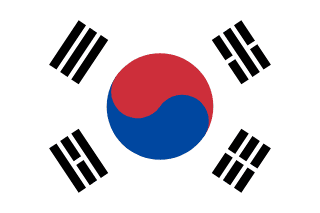
Kingdoms, colony and war
Korea was a unified kingdom for centuries under the Goryeo and then the Joseon dynasty, which gave it Confucian government and, in the fifteenth century, the ingenious Hangul alphabet. Japan annexed the peninsula in 1910 and ruled it harshly until 1945.
Liberation brought division: the Soviet Union occupied the north, the United States the south, and in 1950 the North invaded. The Korean War killed millions and ended in 1953 in a ceasefire, not a peace, leaving the peninsula split at the Demilitarised Zone that still divides it.
The model Ghanaians cite
In 1960 South Korea was poorer than Ghana, which had just won independence. Both were agrarian, aid-dependent and roughly matched in income. Six decades later Korea is a member of the OECD and, since 2010, of its Development Assistance Committee — a donor rather than a recipient. The comparison is the one Ghanaian economists reach for most often when they argue about what went wrong, and what might yet go right.
Korea offers a second model too. Its deliberate export of film, television and pop music — the Hallyu wave, backed by state cultural policy — turned a mid-sized country into a global entertainment force. It is the yardstick against which Nigeria's Nollywood and the Afrobeats boom are now measured, and the template African governments study when they talk of a creative economy.
Democracy and the chaebol
The economic miracle was engineered under military dictatorship, driven by family conglomerates — the chaebol — such as Samsung, Hyundai and LG. Mass protests forced a transition to democracy in 1987, and Korea has held competitive elections since, though the chaebol still dominate the economy.
Today South Korea leads in semiconductors, shipbuilding and consumer electronics, and its soft power reaches from Gangnam Style to the Oscar-winning film Parasite. It faces a falling birth rate, among the lowest in the world, and the unresolved standoff with a nuclear-armed North.