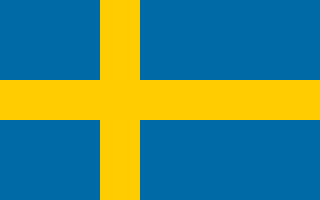
Flag of Sweden

Sweden

Northern Europe · Constitutional monarchy · Kingdom c. 1523

The largest of the Nordic countries, Sweden is a long, forested kingdom stretching to the Arctic, famous for a generous welfare state, industrial design and two centuries of neutrality that ended when it joined NATO in 2024. Its formal role in African colonialism was slight and brief, but its post-war identity as a champion of aid, human rights and anti-apartheid solidarity built a real, if particular, relationship with the continent.

CapitalStockholm
Largest cityStockholm (about 1 million; 1.6 million metro)
PopulationAbout 10.6 million
Official languageSwedish
CurrencySwedish krona (SEK)
NATO member2024
GovernmentParliamentary constitutional monarchy

From empire to welfare model

Sweden was once a great power, its seventeenth-century empire ringing the Baltic, before it shrank back to the Scandinavian peninsula and, after 1814, embraced a neutrality it kept through both world wars. In the twentieth century the Social Democrats built the folkhemmet, the "people's home", a comprehensive welfare state funded by high taxes and underpinned by strong industry, from Volvo and Ericsson to IKEA and, later, Spotify.

That model made Sweden a byword for social democracy and consensus, though recent decades have brought immigration, gang violence and the rise of the hard-right Sweden Democrats, who now prop up the government of Ulf Kristersson. The most dramatic recent break with the past was strategic: after Russia's 2022 invasion of Ukraine, Sweden abandoned two centuries of neutrality and joined NATO in 2024.

A brief foothold and a long solidarity

Sweden's direct colonial record in Africa is thin and best stated plainly. It briefly held the trading fort of Cabo Corso on the Gold Coast, in today's Ghana, in the 1650s before losing it, and it later ran a slave-trading colony on the Caribbean island of Saint-Barthélemy, so it was not wholly outside the Atlantic system. But it never built an African empire.

The deeper connection is modern and, on balance, more creditable. From the 1960s Sweden became one of the largest per-capita aid donors in the world and a vocal supporter of African liberation movements, funding the ANC, SWAPO and FRELIMO when much of the West would not. Olof Palme, the prime minister assassinated in 1986, was a leading global voice against apartheid. And it was over the Congo, in 1961, that the Swedish UN secretary-general Dag Hammarskjöld died in a still-disputed plane crash while trying to broker peace, a death that tied Sweden's name permanently to the drama of African independence.

Design, industry and a colder politics

Sweden remains a wealthy, innovative economy with a global cultural footprint out of scale with its size, from crime fiction to pop music to furniture. But the open, consensual self-image has frayed: debates over integration and crime dominate politics, and the country that once prided itself on welcoming refugees has tightened its borders sharply. It keeps its own currency, the krona, and has stayed out of the euro by referendum.

c. 1523Gustav Vasa founds the modern Swedish kingdom.
c. 1650Sweden briefly holds a Gold Coast trading fort.
1638Sweden establishes a short-lived American colony.
1814Sweden adopts the neutrality it will keep for two centuries.
1932The Social Democrats begin building the welfare state.
1961Dag Hammarskjöld dies in a plane crash over the Congo border.
1960s · 1980sSweden funds African liberation movements.
1986Prime Minister Olof Palme is assassinated.
1995Sweden joins the European Union.
2003Swedes vote to keep the krona and reject the euro.
2022Sweden applies to join NATO after Russia invades Ukraine.
2024Sweden formally becomes a NATO member.

Du gamla, du fria

Written in 1844 to an old folk tune, it became the national anthem purely by popular use, never by any law or royal decree. Curiously, its original verses praise "the North" rather than Sweden by name, a relic of the nineteenth-century Scandinavist movement, and it makes no mention of the monarchy.

Full lyrics and translation → — held off-site deliberately. Anthem texts are official state documents in some countries and still in copyright in others, and Ananse would rather link than guess wrong on either.

Words Richard Dybeck. Music Traditional folk melody. Adopted By custom (never formally adopted).

The recording plays through YouTube's own player and belongs to AnthemKing, who published it — Ananse does not host or restream it. Every anthem in the Atlas is checked against YouTube's own record before embedding, and must carry the country's name in the published title.

What Sweden is known for

Each place links out to a fuller account. Ananse does not photograph these sites itself yet — when it does, the pictures here will be its own.

Sweden on the wire

Live from the Ananse newsroom, refreshed every 30 minutes.

Loading…

← All countries