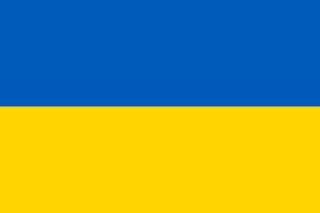
A nation long ruled by others
Ukrainian identity traces back to Kyivan Rus, the medieval state centred on Kyiv that both Ukraine and Russia claim as an origin, before centuries in which Ukrainian lands were divided among Poland, the Cossack hosts, the Russian Empire and Austria. Under Soviet rule Ukraine suffered one of the twentieth century's great atrocities, the Holodomor of 1932 to 1933, a man-made famine in which millions died as Stalin's state seized their grain, a history that gives the country's later fights over food and sovereignty a particular weight.
Independence came with the Soviet collapse in 1991. The following decades were a tug of war between Russian influence and a westward pull, breaking into the open with the Orange Revolution of 2004 and the Maidan uprising of 2014, after which Russia annexed Crimea and backed a war in the east.
The grain that feeds Africa
Ukraine's clearest tie to Africa runs through its black soil. It is one of the world's great exporters of wheat, maize, barley and sunflower oil, and much of that harvest has long gone to Africa and the Middle East; countries such as Egypt, Nigeria, Sudan, Kenya and Somalia depend on Black Sea grain to feed their people. When Russia launched its full-scale invasion in February 2022 and blockaded Ukraine's ports, that supply seized up, and global food prices spiked, hitting African tables hard and pushing parts of the Horn of Africa, already in drought, towards famine.
A UN- and Turkey-brokered deal, the Black Sea Grain Initiative, briefly reopened the ports in 2022 before Russia abandoned it in 2023, and the episode became a lesson in how a European war reaches directly into African markets. It also entangled Africa in the diplomacy of the war: many African governments declined to take sides, wary of both Western pressure and their own dependence on Russian grain, fertiliser and, in the Sahel, Russian arms and mercenaries. During the Cold War, by contrast, Soviet Ukraine had trained African students and cadres as part of Moscow's courtship of the newly independent continent, a thinner but real earlier link.
A country defending itself
Russia's 2022 invasion, intended to topple the government in days, instead united Ukraine and drew vast Western support. Under President Volodymyr Zelensky, a former comedian turned wartime leader, the country has endured occupation, mass displacement, the destruction of cities and heavy casualties while holding much of its territory. The war has reshaped European security, driven Sweden and Finland into NATO, and left Ukraine's future, and its long-sought EU and NATO membership, unresolved as the fighting grinds on.